Ensuring that everyone has equal access to healthy growth and development opportunities is a key component of achieving the United Nations Sustainable Development Goals (SDGs). In the Asia-Pacific region, sports are not only about competitive performance, but also about youth health, social mobility, and equitable development. However, high-level athletic training has long relied on scarce professional coaches and costly facilities—an invisible barrier that prevents countless talented children from even reaching the starting line.
The Department of Electronic Engineering at Tsinghua University has unveiled its latest innovation in the field of “AI + Sports”—a “Smart Boxing” system that integrates artificial intelligence with multimodal sensing. This system aims to leverage technology to bring scientific training out of professional venues and make it truly accessible to a broader population.
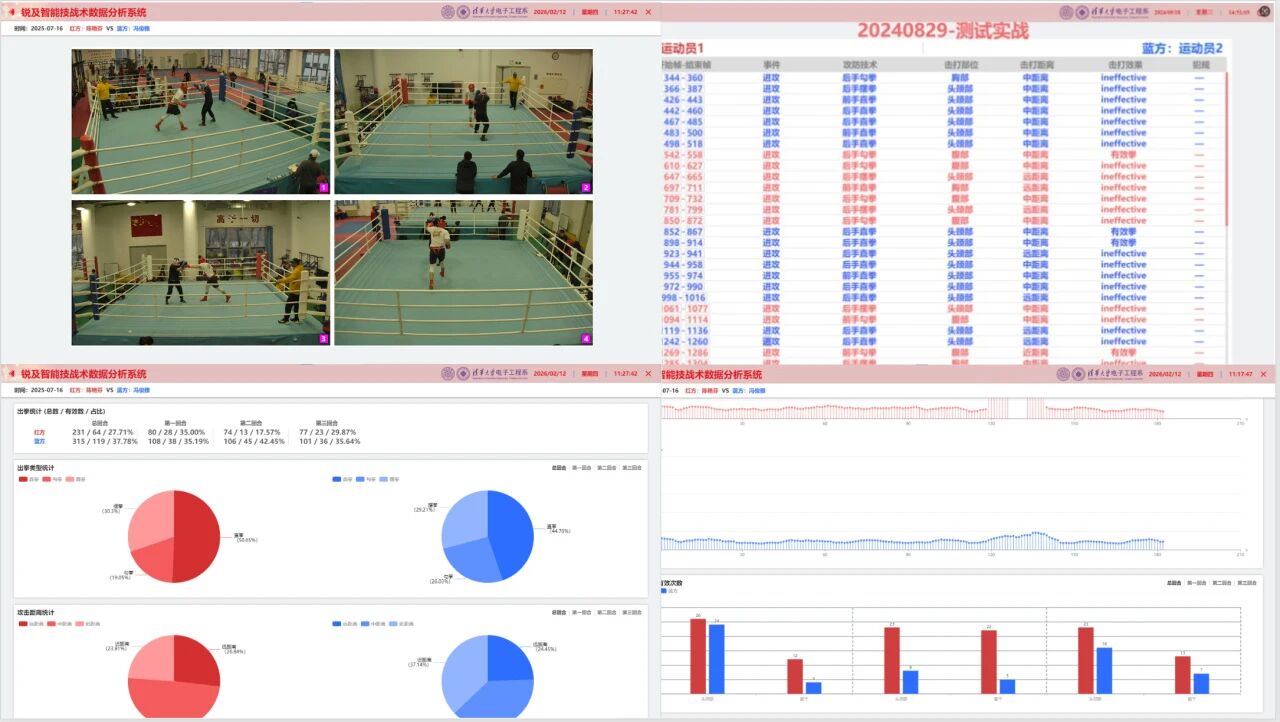
Boxing Ring Tactical Analysis Platform
Making “Training by Feel” a Thing of the Past
For decades, sports training has heavily relied on experience. Behind elite athletes stands an invisible support system composed of expert coaches, data analysts, and advanced equipment. In contrast, in ordinary training settings, whether movements are standardized, workloads are reasonable, or risks are controllable often depends solely on the coach’s naked-eye judgment.
The Tsinghua EE team turned their attention to remote regions such as Xinjiang—places hidden in the folds of the map. For many children in underdeveloped areas, sports represent an opportunity to change their lives. Yet without systematic training and scientific guidance, their potential is often exhausted through repeated trial and error.
The team focuses on bridging this long-standing “technology gap”: Can artificial intelligence transform scientific training—once exclusive to elite athletes—into a replicable and accessible public resource?
From the National Team to the Grassroots: Technology Descends
The “Intelligent Boxing” system was initially developed for China’s national boxing team. Through high-speed vision, inertial sensing, and electromyography (EMG)-based multimodal perception, the system precisely captures every punch, movement, and force variation. AI models then perform motion analysis, tactical evaluation, and training feedback.
In national team practice, it helped coaches shift from experience-based judgment to data-driven decision-making, enabling dynamic training adjustments and contributing to China’s historic breakthroughs in international competitions.
But for the Tsinghua EE team, serving champions was not the final goal. The real challenge was bringing this system beyond elite training bases into resource-limited environments.
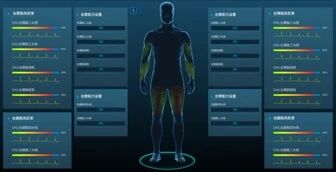
Athletic Human Factors Workstation Platform
AI as an “Always-On Digital Coach”
Once technology steps down from the podium, it takes on a new mission.
In remote training gyms without world-class coaches or complex instruments, the Intelligent Boxing system uses lightweight, nearly imperceptible wearable devices to continuously collect key physiological and motion data. It automatically generates clear and intuitive training feedback.
The system integrates cutting-edge interdisciplinary technologies. The electrophysiological intelligent training suit combines advanced biosignal acquisition with flexible wearable technology, enabling seamless integration of cardiac, neural, and muscular signal monitoring. Through multimodal data fusion and full-chain visualization, coaches can track complete muscle activity processes, linking neural control, muscle fatigue, and athletic performance into a unified physiological framework.
Even in the most basic training environments, AI can function as a stable, continuous, and ever-present digital coach.
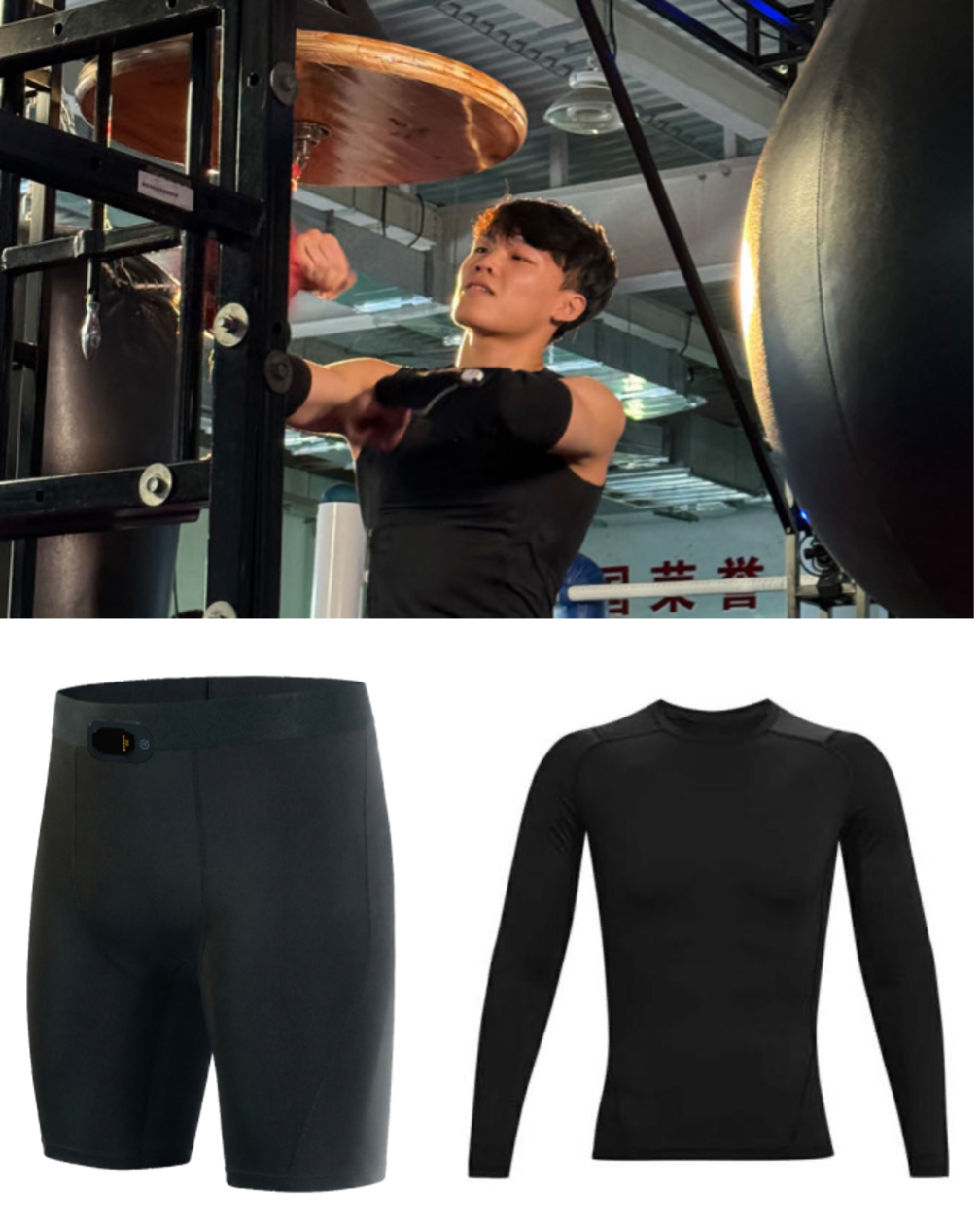
Intelligent Training Suit System
The True Value of Technology: Fairness and Hope
For children, training is no longer blind repetition. For grassroots coaches, technology becomes a reliable amplifier, maximizing limited experience.
Not every child will stand on the world stage. But every child deserves a fair opportunity for growth.
The significance of Intelligent Boxing lies not in producing more champions, but in lowering the barriers to professional training. By making scientific, standardized, and safe athletic training accessible to more people, technology transforms educational equity from aspiration into reality.
This represents the true value of AI within the sustainable development framework—not to replace people, but to narrow disparities.
When artificial intelligence genuinely reaches grassroots communities, youth, and underdeveloped regions, technology becomes not merely a tool of efficiency, but a force that carries hope.
In recent years, the Department of Electronic Engineering at Tsinghua University has maintained in-depth exchanges with UN agencies to explore how cutting-edge technologies can empower the Sustainable Development Goals (SDGs). In October 2024, representatives from five international organizations—including the International Telecommunication Union (ITU) and the World Health Organization (WHO)—visited the department, where faculty and students presented innovations in AI and big data platforms applied to urban planning, smart transportation, and personalized healthcare. In October 2025, Ms. Armida Salsiah Alisjahbana, Executive Secretary of the United Nations Economic and Social Commission for Asia and the Pacific (UNESCAP), visited Tsinghua’s Department of Electronic Engineering and observed demonstrations of humanoid robots, bionic faces, and urban simulators. The visit offered insight into how the department translates real-world needs into tangible AI-powered solutions for social good.
From February 24 to 27, 2026, Tsinghua University will be invited to participate in the 13th Asia-Pacific Forum on Sustainable Development (APFSD) in Bangkok, Thailand, where it will further share its SDG-driven technological solutions on an international stage.