Democratizing access to quality healthcare is pivotal for reaching the UN's Sustainable Development Goal (SDG) of "Good Health and Well-Being." Across the Asia-Pacific, the challenge of delivering respiratory care beyond barriers of distance and limited resources demands innovative technological answers.
At the 13th Asia-Pacific Forum on Sustainable Development (APFSD) from February 24-27, 2026, Tsinghua University will showcase frontier technologies driving the SDGs. Among them, the AI-powered Lung Electrical Impedance Tomography (EIT) system, developed by Professor Li Maokun's team in the Department of Electronic Engineering, offers a promising path. By enabling portable, radiation-free lung monitoring, it seeks to make precise health insights available anywhere, transforming early detection and management of pulmonary diseases.
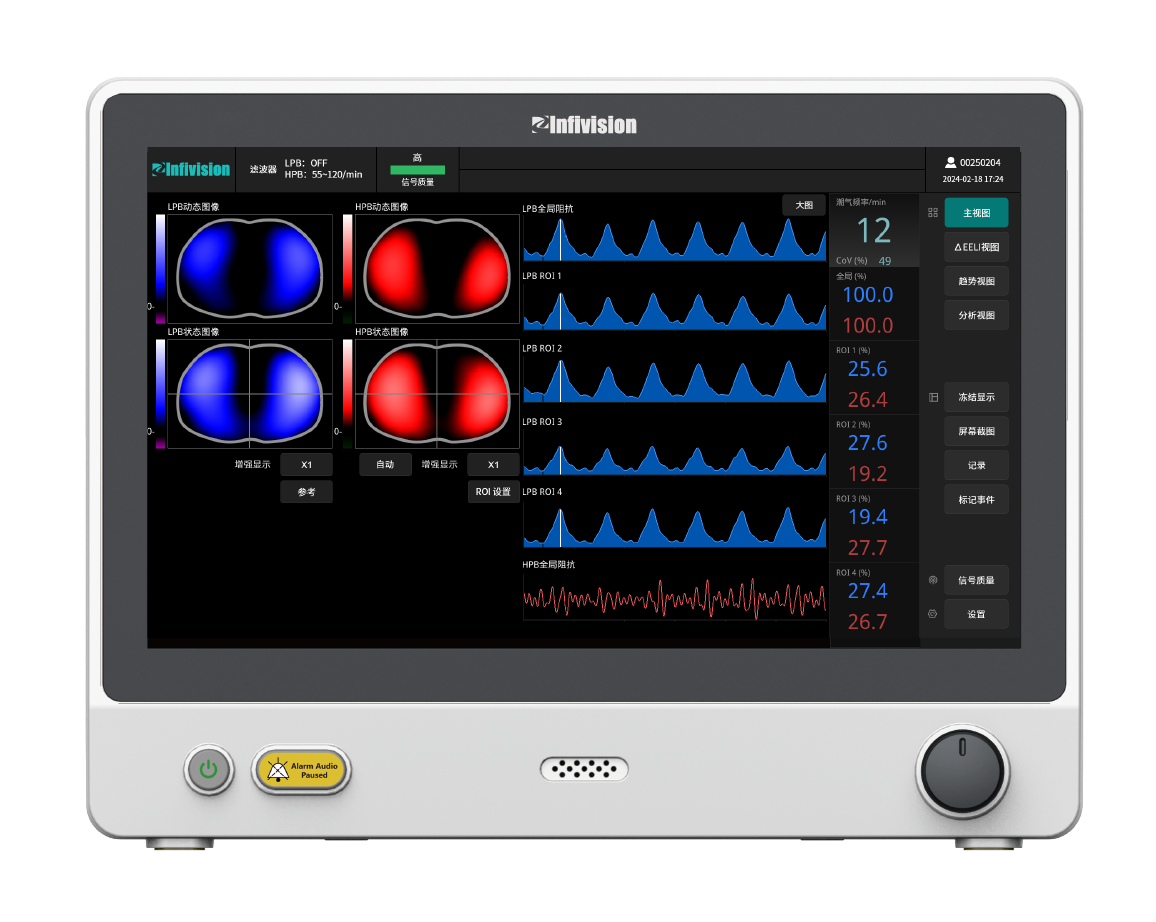
EIT system
Bringing High-End Medical Devices "Down from the Ivory Tower"
For decades, advanced imaging modalities like CT and MRI have been restricted to major hospitals due to their massive size, high costs, and radiation risks. In many underdeveloped regions, identifying internal pathologies often requires patients to travel long distances to cities—an invisible wall blocking countless people from accurate diagnosis.
How can we make the "invisible" visible in resource-limited settings? Professor Li’s team has delivered a solution by combining electromagnetic computational sensing with cutting-edge AI. Unlike traditional heavy machinery, this EIT system requires no expensive shielded rooms and emits no radiation. Compact and portable, it utilizes the differences in electrical conductivity within the human body. Powered by deep learning algorithms, it reconstructs real-time, dynamic images of lung ventilation and perfusion.
This achievement is more than an academic breakthrough in computational imaging; it carries immense social value. By lowering the threshold for high-quality diagnostics, it brings medical imaging out of the "ivory tower" of tertiary hospitals, serving broader populations at the grassroots level.
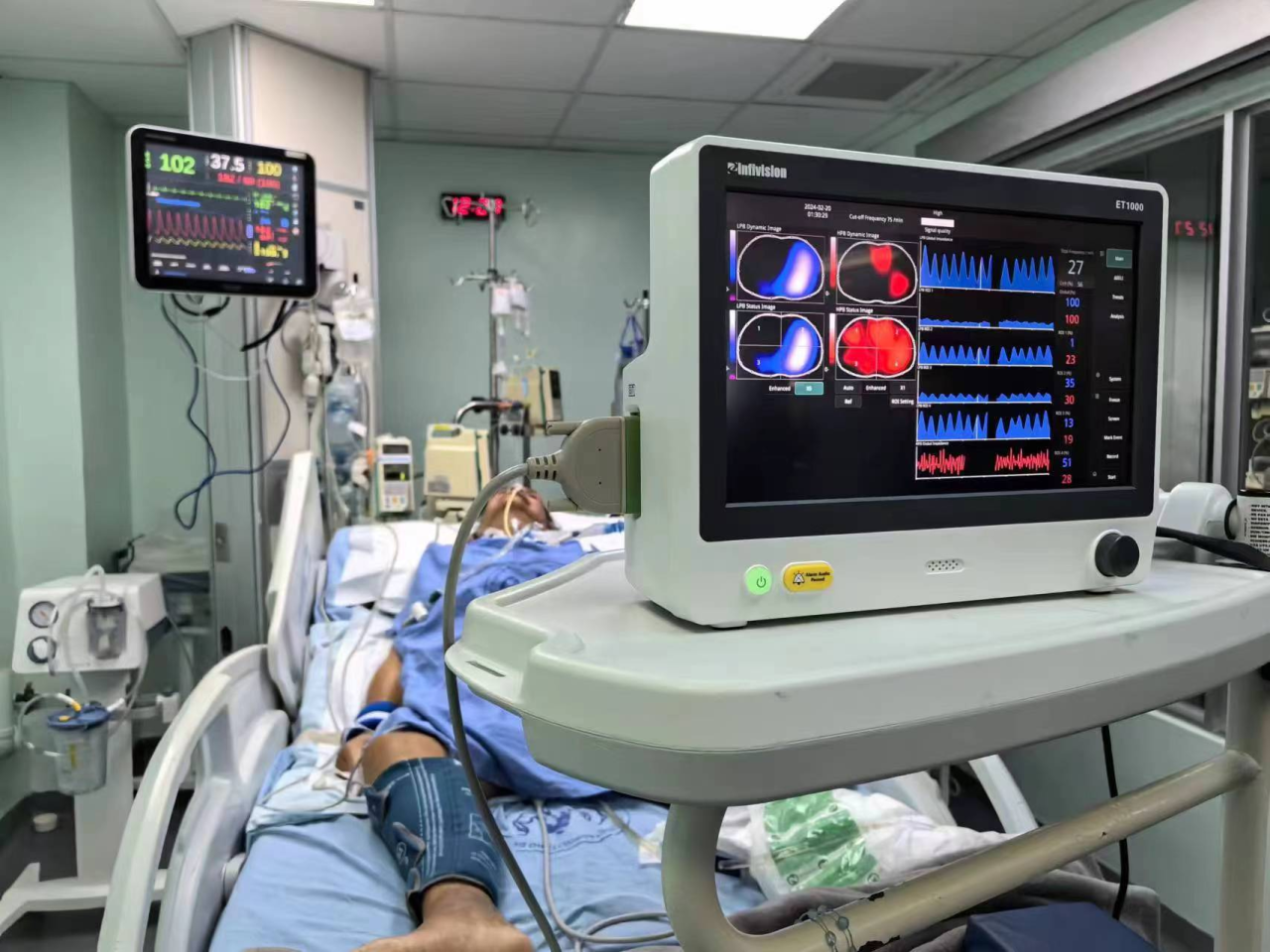
The EIT device in clinical use
A "Third Eye" in Critical Moments: From ICUs to Remote Frontiers
In Lishui, Zhejiang Province—a region facing challenges of inconvenient transportation and limited medical resources—the EIT system demonstrated its unique advantages during a clinical rescue. A severe patient suffered a sudden pulmonary embolism, with vital signs so unstable that they were entirely dependent on ECMO (Extracorporeal Membrane Oxygenation) for life support. In such a fragile state, transporting the patient to the radiology department for a CT scan was nearly impossible and fraught with lethal risk.
The EIT system stepped in to fill the void. Doctors simply applied an electrode belt to the patient at the bedside, and the screen instantly displayed real-time ventilation and perfusion data. Through intuitive dynamic imaging, the medical team clearly identified "perfusion defects"—areas invisible to conventional bedside tools. Based on this precise intelligence, they adjusted the treatment plan, guiding the patient through the most critical window of survival.
This impact extends beyond the urgency of the ICU. In remote border posts or rural clinics lacking specialized radiologists, this technology holds equal significance. Augmented by AI diagnostic assistance, the EIT device acts as a "third eye" for grassroots doctors, enabling rapid assessment of emergencies like pneumothorax or pulmonary hemorrhage. It ensures that quality healthcare truly reaches the "last mile."
No More "Flying Blind": AI Precision for Grassroots Care
Beyond emergencies, empowering primary care physicians with "expert-level" capabilities is key to medical equity.
In respiratory therapy, setting ventilator parameters is a delicate balancing act. If the pressure is too low, the alveoli won't open; too high, and the lungs risk injury. In top-tier hospitals, this relies on expert experience. However, in grassroots settings, doctors often have to estimate, turning treatment into a game of chance ("flying blind") that increases the risk of lung damage.
Now, with the aid of the EIT system, this dilemma is resolved. In clinical practice at the People's Hospital of Morin Dawa Daur Autonomous Banner in Inner Mongolia, the device serves as a "visual ruler" for doctors. AI algorithms transform complex lung mechanics into intuitive images, allowing physicians to see exactly how every millibar of pressure affects the lungs.
This visual feedback enables even less experienced doctors to perform precise "titration" of treatment. It not only improves safety but, more importantly, uses AI to "democratize" expertise—leveling the technical playing field between different tiers of hospitals and ensuring that patients in grassroots facilities receive precise, standardized care.
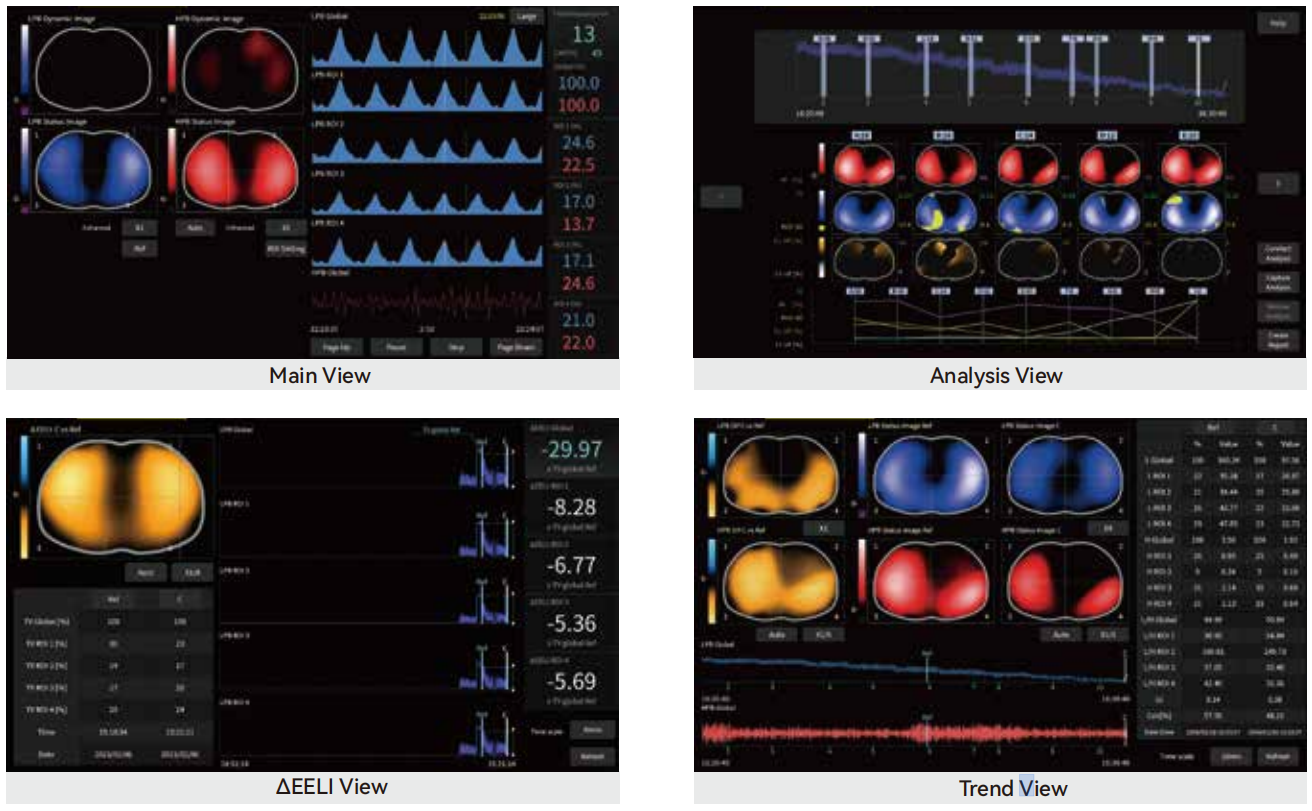
EIT visualization
From Tsinghua to the World: The Power of Inclusive Tech
From a lab algorithm to a clinical lifesaver, this innovation has successfully moved beyond the campus. Currently, the technology is being used for clinical and research purposes in over 100 leading medical institutions domestically and internationally, including Peking Union Medical College Hospital, Beijing Rehabilitation Hospital, and Erasmus University Hospital in Brussels. It has also expanded to 16 countries, including Italy and Switzerland, benefiting thousands of patients.
As a flagship case of Tsinghua University’s technology supporting sustainable development, this project will soon be showcased at the 13th Asia-Pacific Forum on Sustainable Development (APFSD) in Bangkok, Thailand. There, this EIT system—embodying Chinese innovation—will demonstrate to the world how technology can convey warmth and power the global vision of "Health for All."