原文来自清华大学电子工程系:
https://mp.weixin.qq.com/s/AzEXMttPkLffvCMMo8a-Yg
The research group led by Professor Yong Li at the Department of Electronic Engineering, Tsinghua University, has proposed a method for discovering dynamic laws of complex systems based on neural symbolic regression (ND⟡). This breakthrough solves the long‑standing challenge of revealing the underlying laws of high‑dimensional complex systems, enabling AI to automatically discover dynamical laws of complex systems from observational data.
The essence of science lies in discovering the fundamental laws that govern nature and society. From Kepler’s induction of planetary motion laws based on Tycho’s observational data, to Newton’s formulation of the law of universal gravitation to explain them, this marks a leap from “phenomenon description” to “mechanism explanation”. Today, we are immersed in an ocean of complex system data – gene regulation, ecological communities, epidemic spreading, socio‑economic systems – yet the discovery of the intrinsic, interpretable mathematical laws of these systems lags far behind the accumulation of data. Traditional methods rely on human scientists’ intuition and simplifying assumptions, and struggle in the face of high dimensionality and complexity. How to automatically induce the dynamical laws governing the evolution of systems from high‑dimensional complex data is a frontier challenge at the intersection of AI and complexity science.
To address this challenge, this study proposes a neural symbolic regression method for complex systems (Figure 1), solving the fundamental obstacle that has hindered the application of symbolic regression to complex systems – the “curse of dimensionality”, where the search space expands super‑exponentially with the number of system nodes. Specifically, by designing network dynamics operators and abstracting node operations as vectorized operations, the method decouples formula expression from network scale, achieving a crucial “dimension invariance” and compressing the search space from super‑exponential to a fixed low dimension. Meanwhile, by pre‑training the NDformer model, the method intelligently perceives dynamical patterns in the data, improving search efficiency by three orders of magnitude. This approach does not rely on domain prior knowledge, achieves accurate reconstruction of system dynamics and parameter inversion, successfully bridges the gap between high‑dimensional complex data and clear mathematical principles, and paves the way for AI to autonomously discover the underlying mathematical laws of complex systems.
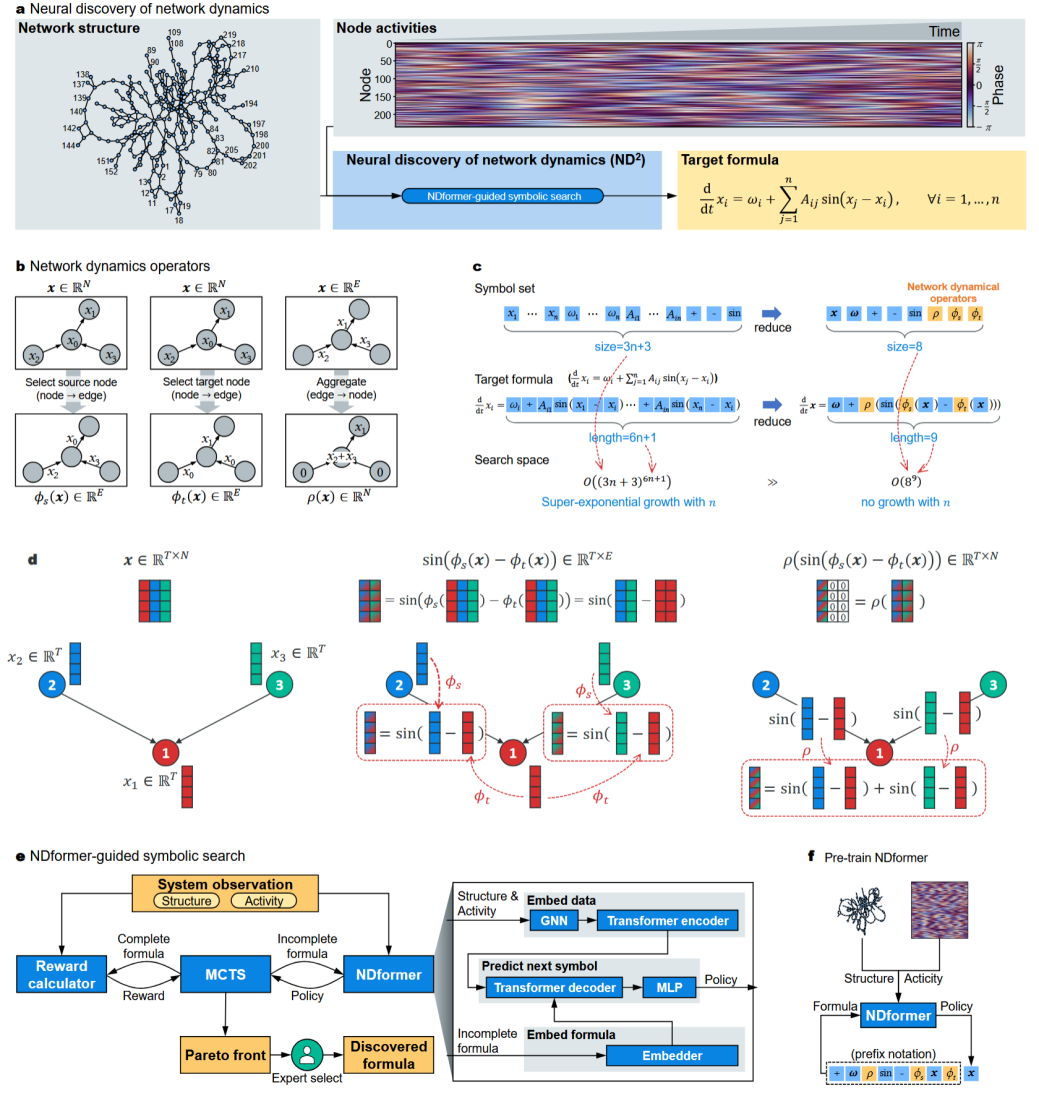
Figure 1: Schematic diagram of the ND⟡ method
Extensively validated by empirical evidence (as shown in Figure 2), ND⟡ not only perfectly recovers more than ten classical dynamical laws of complex systems in benchmark tests but also demonstrates scientific insight: it corrects classical models of gene regulation and microbial communities, reveals new laws of high‑order interactions and population sensitivity, and reduces prediction errors by nearly 60%. More importantly, for the first time, it can discover dynamical formulas with common mathematical structures and cross‑scale universal laws in previously unknown complex domains such as epidemic spreading, accurately quantifying the fundamental dynamical differences between China and the United States due to their different intervention strategies. This marks that AI has transcended being a mere assistive tool and become a scientific discoverer capable of generating new knowledge.
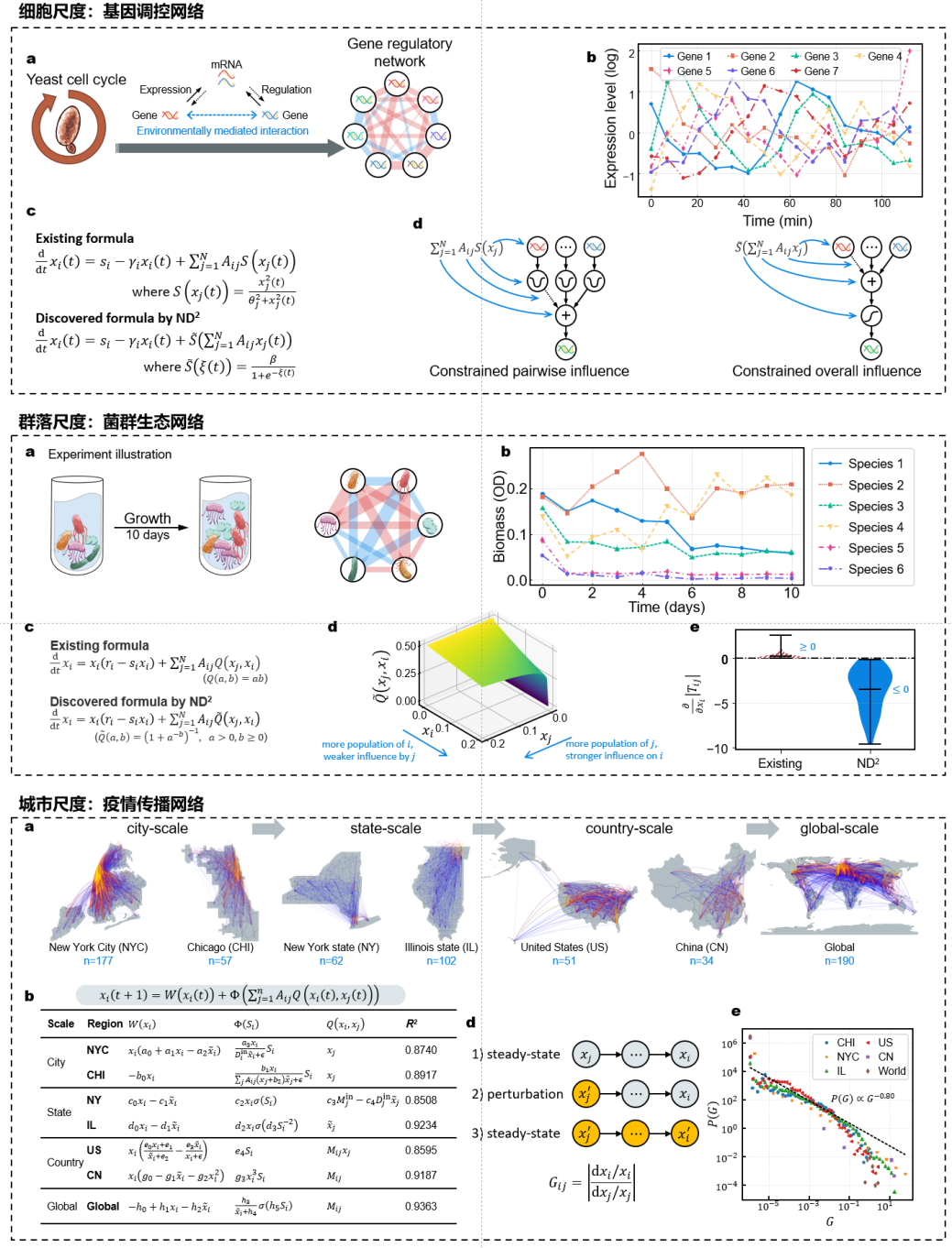
Figure 2: Using the ND⟡ method to reveal dynamical laws of complex systems at different scales
Given the inspirational nature of this work in the field of AI for Science, Nature Computational Science simultaneously published a News & Views article titled “Discovering the laws behind complex networked systems”, providing an in‑depth report on this research. The commentary points out that the proposed ND⟡ (Neural Discovery of Network Dynamics) method achieves, for the first time in theory, the automated discovery of underlying dynamical equations for high‑dimensional complex networked systems without prior knowledge – its significance far exceeds mere technical optimization. This method is like a modern‑day “Kepler”, efficiently extracting predictive formulas from data (Figure 3). The success of this research supports the “low‑rank hypothesis” of complex systems, proving that machines can automatically discover low‑dimensional dynamical laws within high‑dimensional systems. This progress not only provides a new tool for understanding complex systems but also marks a key step in AI’s journey toward the future “Newtonian moment” of revealing deep mechanisms.
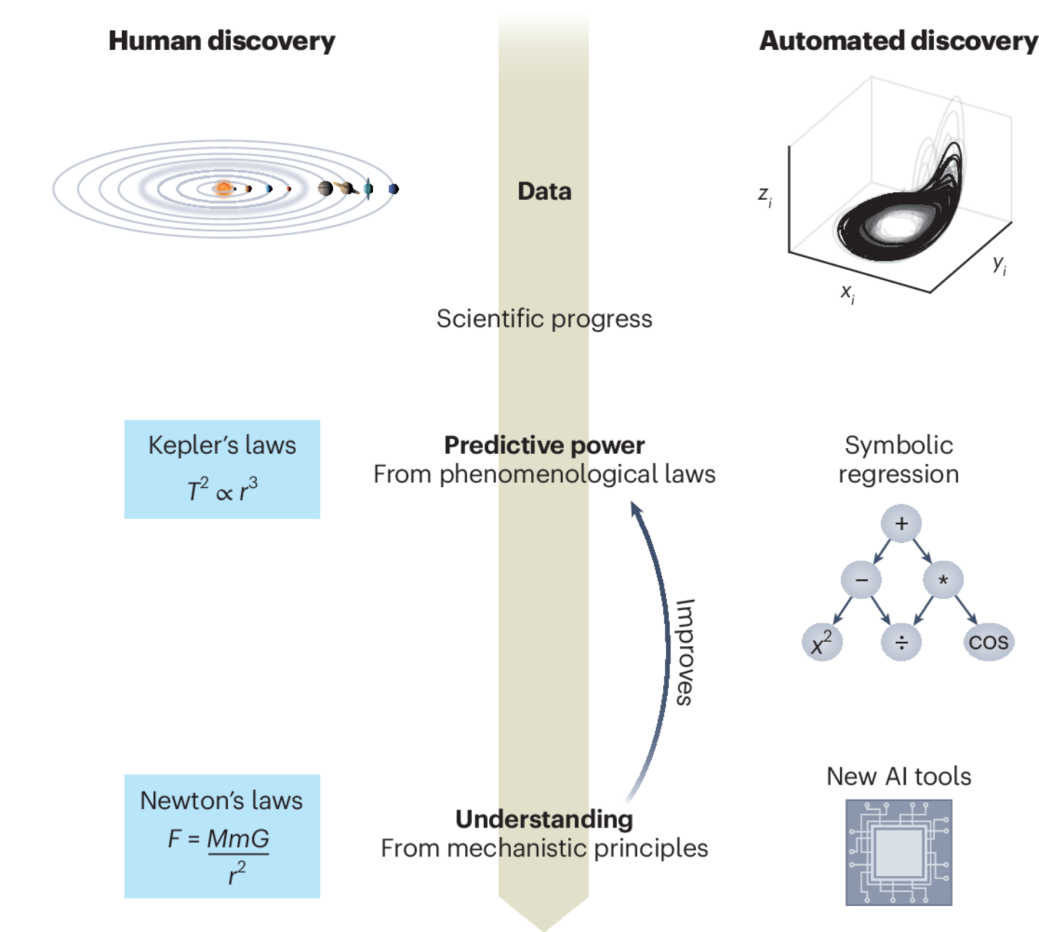
Figure 3: The commentary article notes that “this work automatically discovers precise formulas of dynamical laws of complex systems through neural symbolic regression, achieving a ‘Kepler moment’ in AI scientific exploration and marking a key step toward a future ‘Newtonian moment’ of revealing deep mechanisms.”
The related research was published in Nature Computational Science under the title “Discovering network dynamics with neural symbolic regression”. Zihan Yu, a PhD student, and Jingtao Ding, a postdoctoral fellow in the Department of Electronic Engineering, Tsinghua University, are the co‑first authors of the paper. Jingtao Ding and Professor Yong Li are the co‑corresponding authors.
Paper information
Paper link: https://www.nature.com/articles/s43588-025-00893-8