On July 4, 2026, the closing ceremony and project showcase of the 2026 Tsinghua University Department of Electronic Engineering (EE) Summer School was held at the EE Building. Prof. Li Maokun, Deputy Chair of the Department, attended the event and delivered a closing address. Forty participants from more than ten countries and regions — including Singapore, Thailand, Spain, the United States, and Germany — joined Tsinghua EE faculty members, international program coordinators, teaching assistants, and student ambassadors in celebrating the conclusion of the two-week program.
I. Opening: A Look Back at Two Weeks of Summer Learning
The ceremony opened with a summer school highlight video, capturing the memorable moments of the past two weeks.
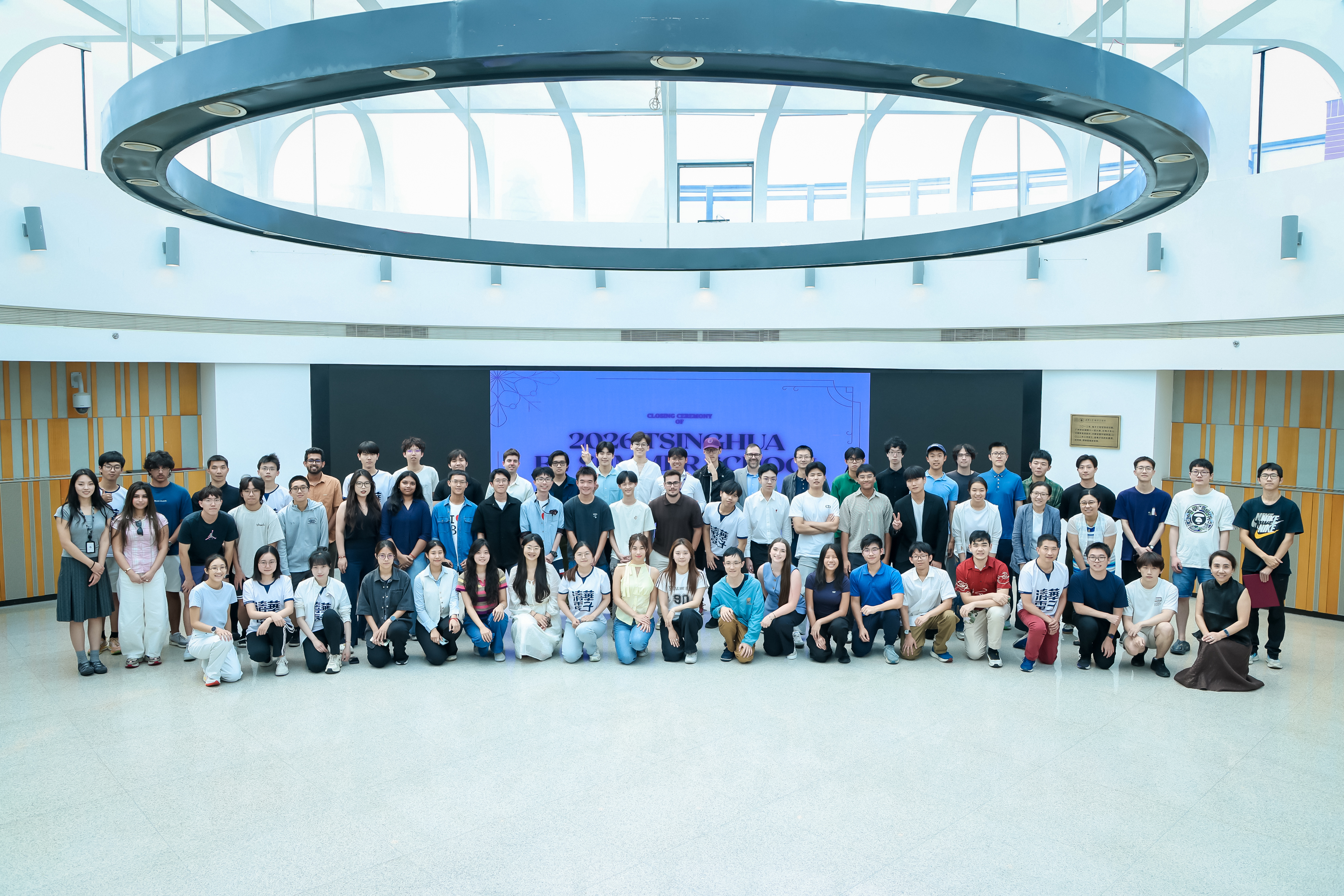
2026 Tsinghua EE International Summer School group photo
The ceremony was co-hosted by two outstanding summer school participants — Rori Reynolds from the United States and Nisawan Ngambenjavichaikul from Chulalongkorn University, Thailand. In his address, Prof. Li Maokun reflected on the summer school journey. Over the two weeks, 40 students attended lectures from ten distinguished scholars from Tsinghua EE and partner institutions worldwide, including four IEEE Fellows — Daniel Povey, Amine Bermak, Henk Wymeersch, and Zhang Yingjun (Angela) — as well as Tsinghua EE professors Li Yong, Zhang Milin, Zhou Sheng, Zhang Chao, Prof. Zhu Hengyuan from the School of Economics and Management, and Mr. Ma Lin, Managing Partner of SEE Fund. Participants also visited industry sites including ByteDance, Infinigence AI, and Noetix Robotics, explored Tianjin Port and the China-Singapore Tianjin Eco-City, toured the Forbidden City and the Great Wall, and immersed themselves in Tsinghua‘s campus culture. Prof. Li Maokun encouraged the students: “Take back not only the knowledge you have gained, but also the friendships you have built. You are now part of the Tsinghua EE global network.”
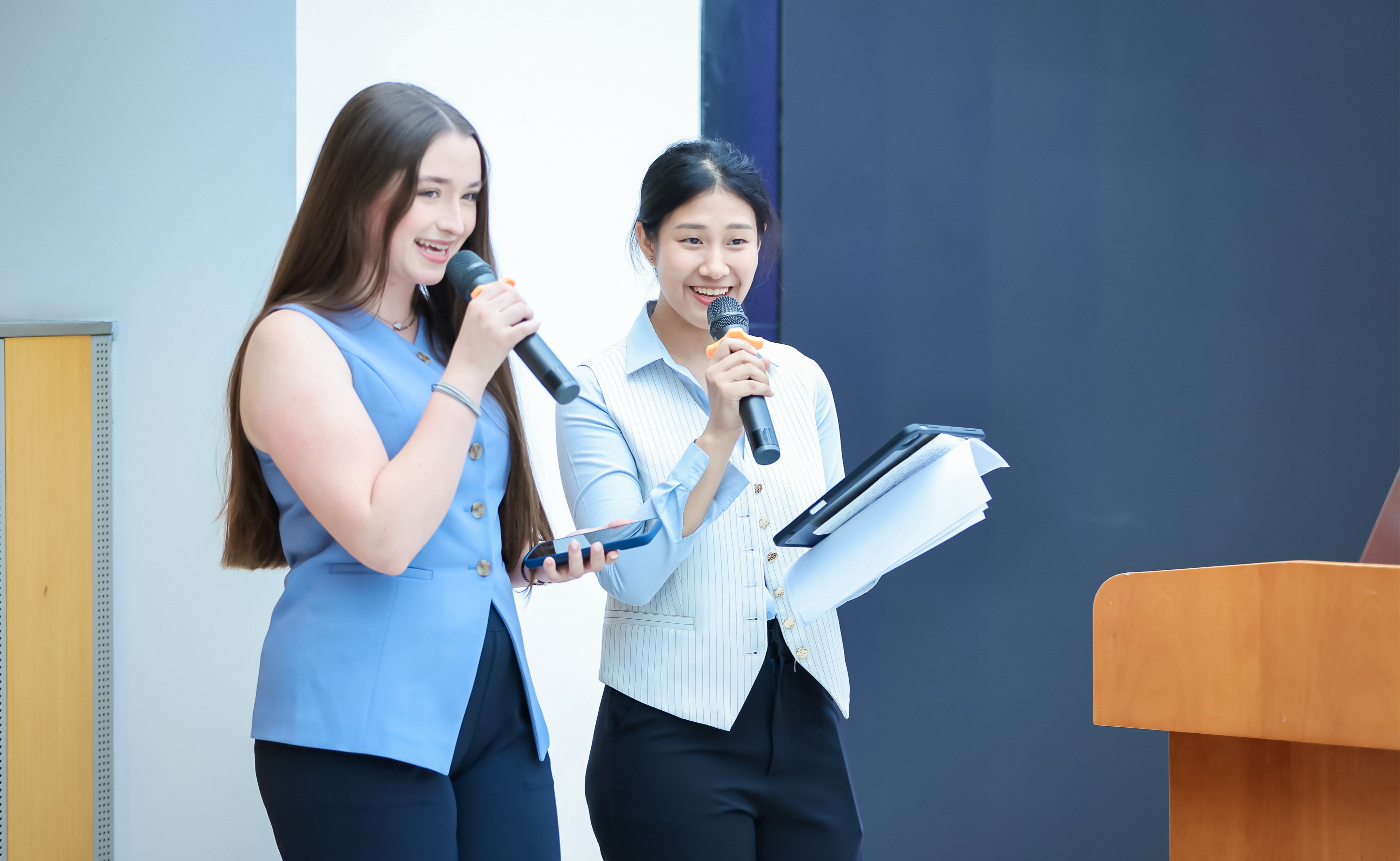
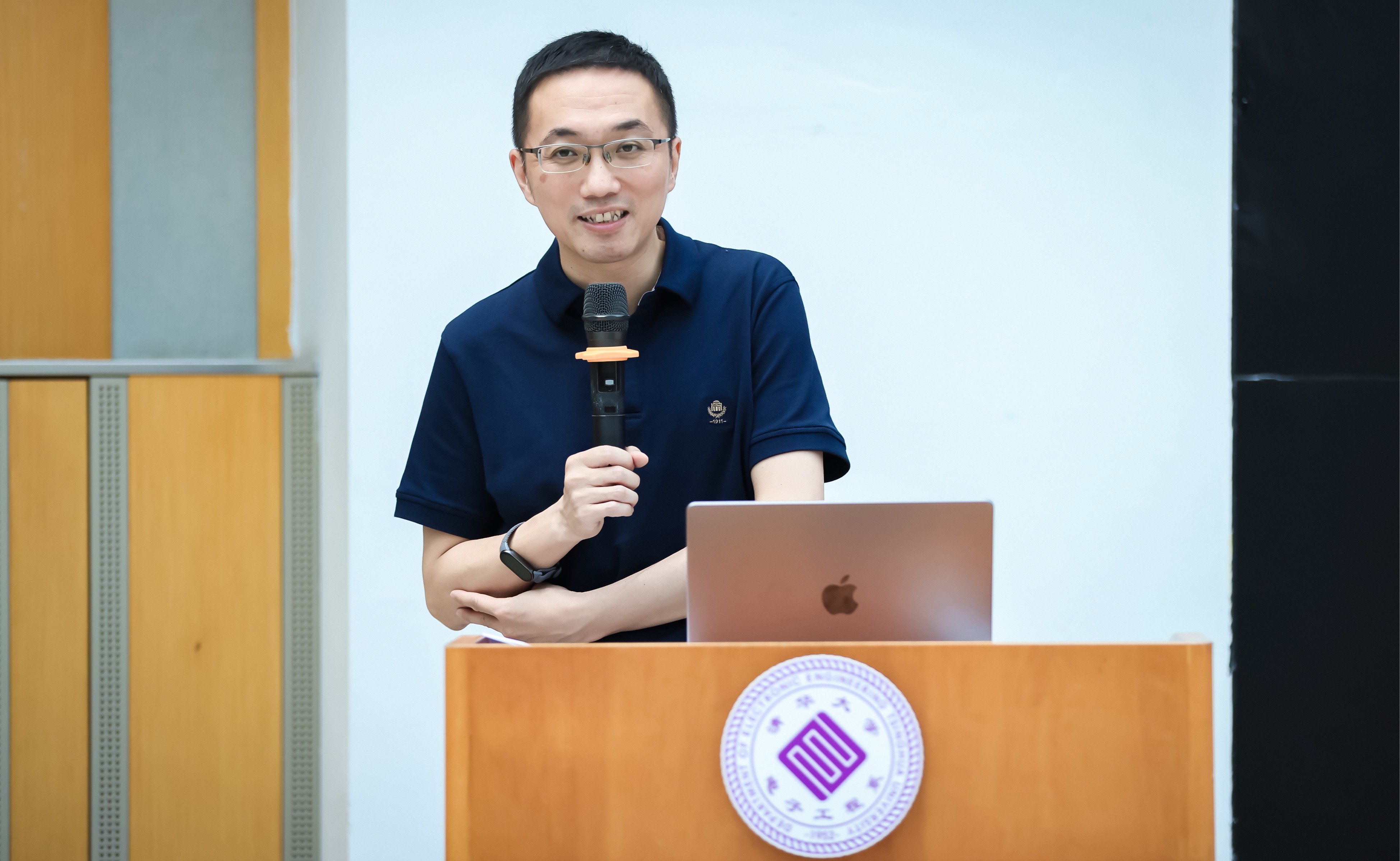
Student hosts Rori Reynolds and Nisawan Ngambenjavichaikul / Prof. Li Maokun delivers his closing address
II. Project Showcase and Awards
Six student teams were formed during the summer school, each developing a demonstrable project around the core theme “AI+ for Urban Sustainability.” The projects were organized into two technical tracks (Track A1 and Track A2) and one creative track (Track B). The review committee, composed of Prof. Li Maokun, Prof. Zhang Milin, Prof. Henk Wymeersch, and the project teaching assistants, evaluated the projects across five dimensions: technical innovation, solution completeness, live demo quality, defense logic, and teamwork.
Track A1 (Full-Duplex Speech LLM Customization): Two teams performed LoRA fine-tuning on the SALMONN-omni model using scenario-specific dialogue datasets from Agora, and delivered live human-machine conversation demos.
Track A2 (Wearable Physiological Signals AI Analysis): Three teams built real-time monitoring dashboards for motion recognition and other applications using open-source sEMG hardware.
Track B (Creative Practice): One team produced a summer school micro-documentary using footage captured throughout the program.
Throughout the two weeks, all teams devoted significant time outside of lectures to refine their solutions and debug their prototypes. The quality of live demonstrations and defense presentations was highly praised by all reviewers. Competition in both technical tracks was exceptionally close, with the winning teams edging out their rivals by just a single vote. After comprehensive evaluation, the final award recipients were:
Track A1 Best Project Award: Team TUNA FISH
Track A2 Best Project Award: Team Panda Cooking
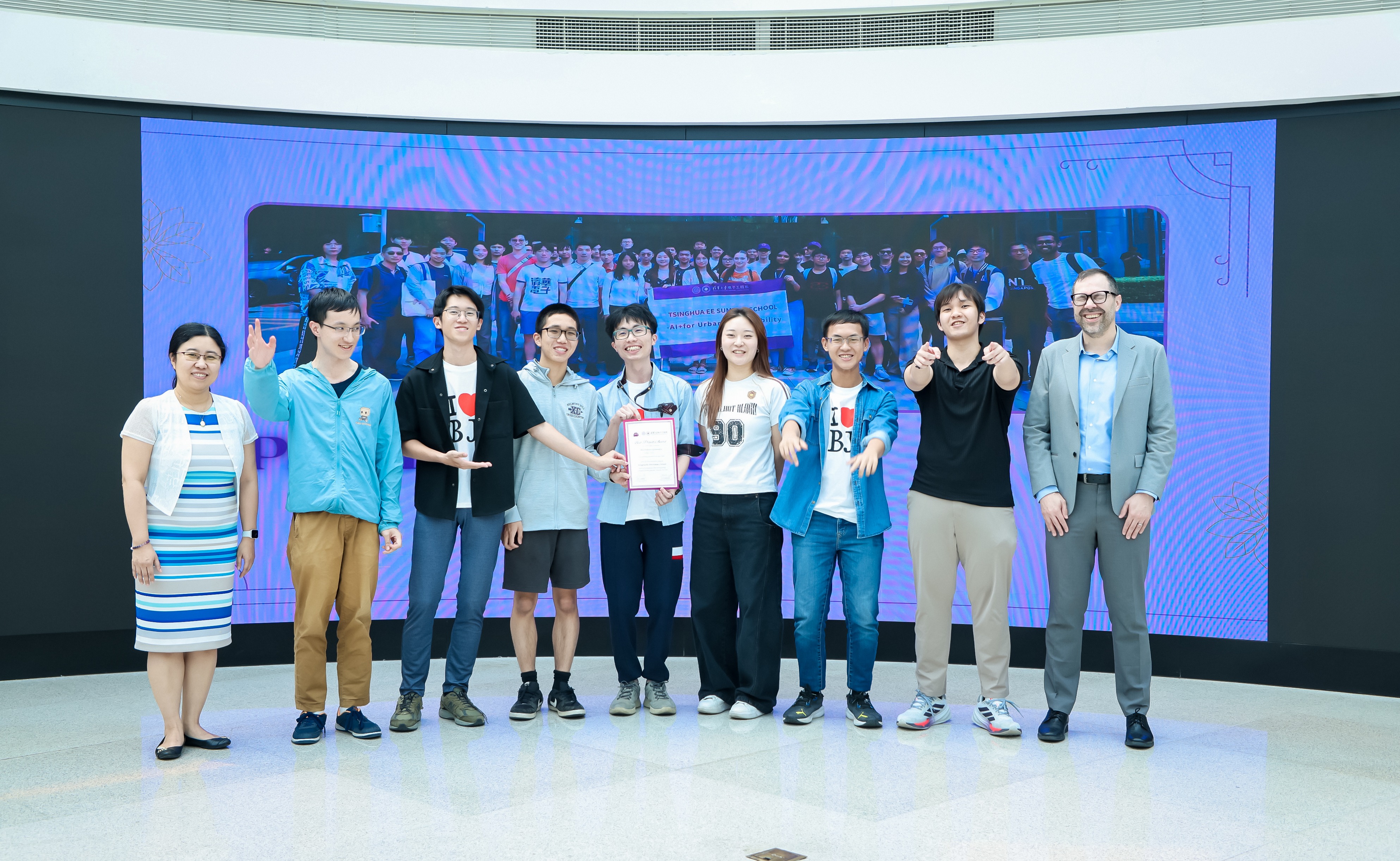
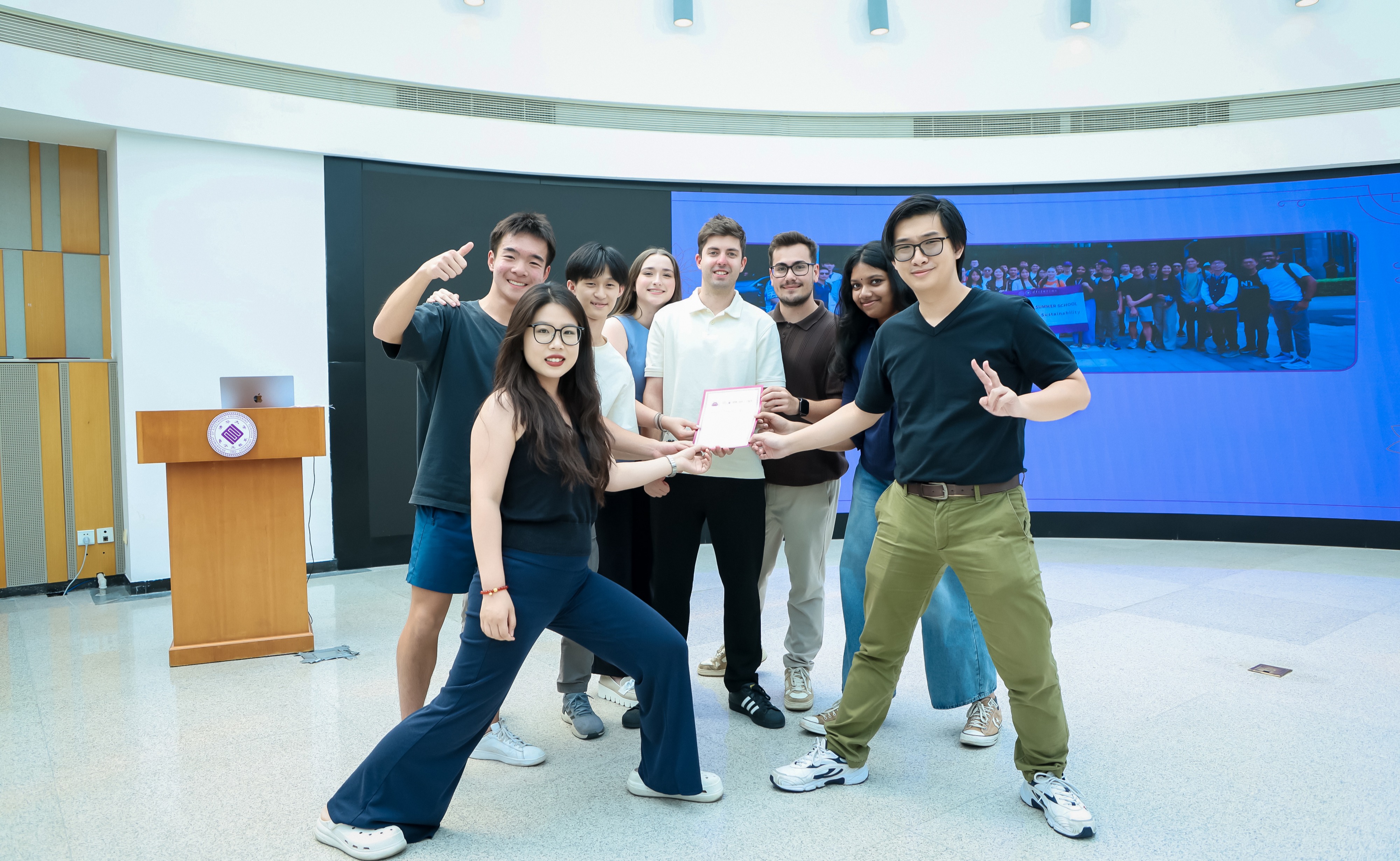
Track A1 Best Project Award: TUNA FISH / Track A2 Best Project Award: Panda Cooking
III. International Programs Introduction and Student Reflections
Following the awards ceremony, Ms. Guo Yining, Director of Global Engineering Education at the EE Department, presented an overview of Tsinghua EE‘s graduate admissions policies and English-taught programs. Current international students also shared their firsthand experiences of campus life, lab research, and cross-cultural exchange at Tsinghua, offering valuable insights for summer school participants considering future studies at Tsinghua.
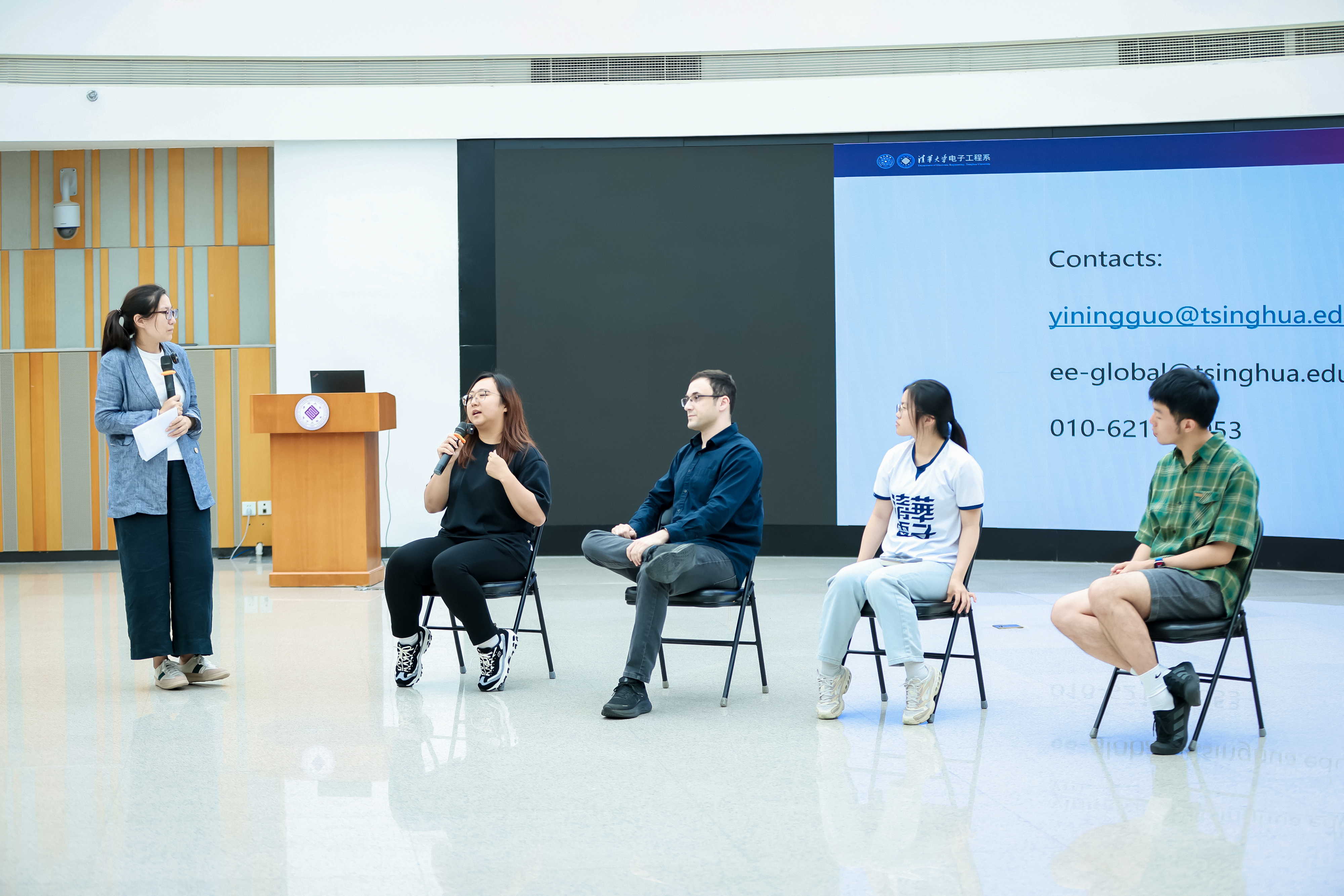
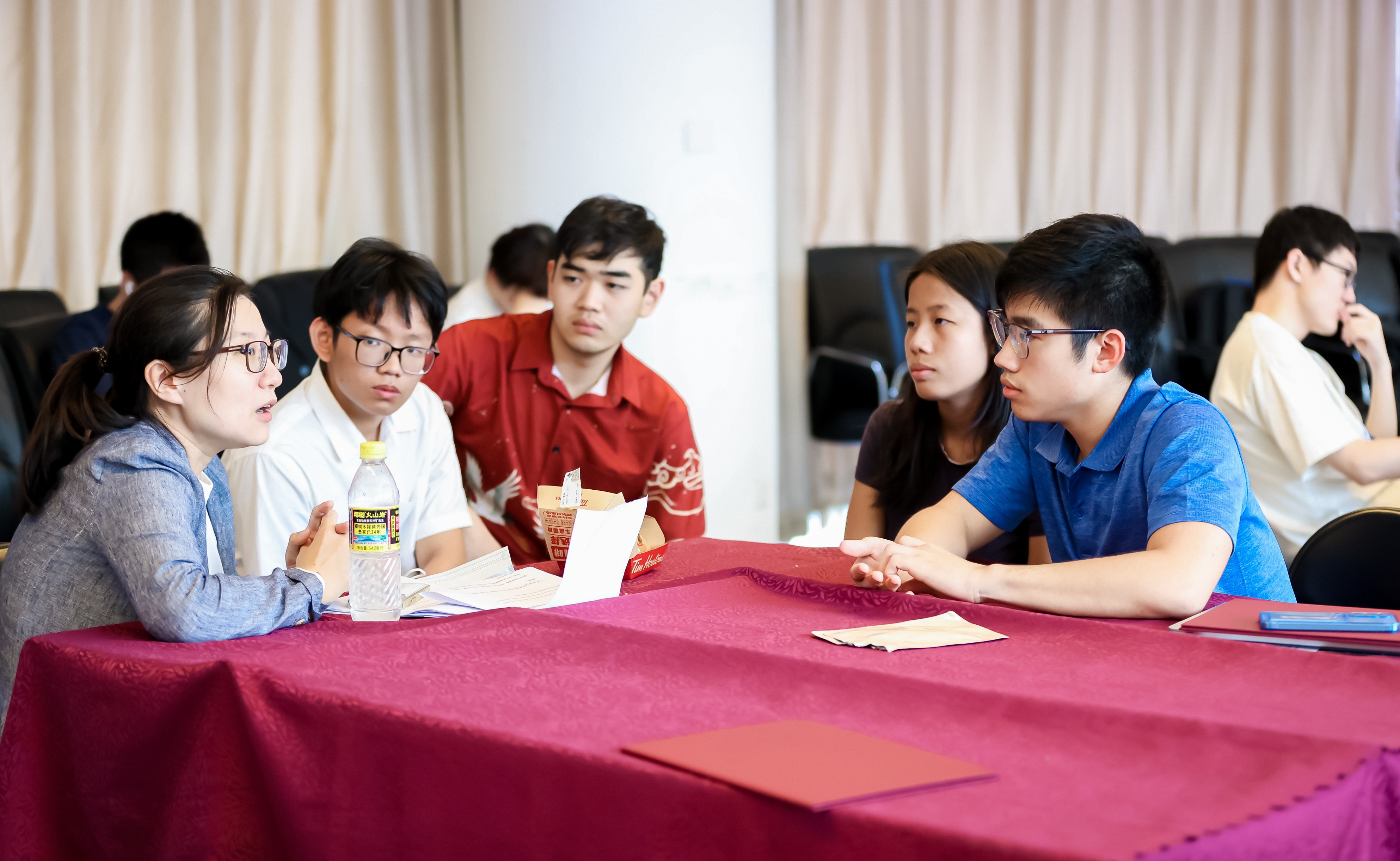
Ms. Guo Yining with current international students / exchanges with summer school participants
Two summer school participants then took the stage to share their reflections — Marc Subira Pons from the Universitat Autònoma de Barcelona and Ngoc Anh Thu Nguyen from the Technical University of Munich. They spoke about their learning, industry visits, and project work over the two weeks, sharing their observations, research takeaways, and cultural insights gained in Beijing, while expressing their gratitude to the lecturers and student ambassadors.
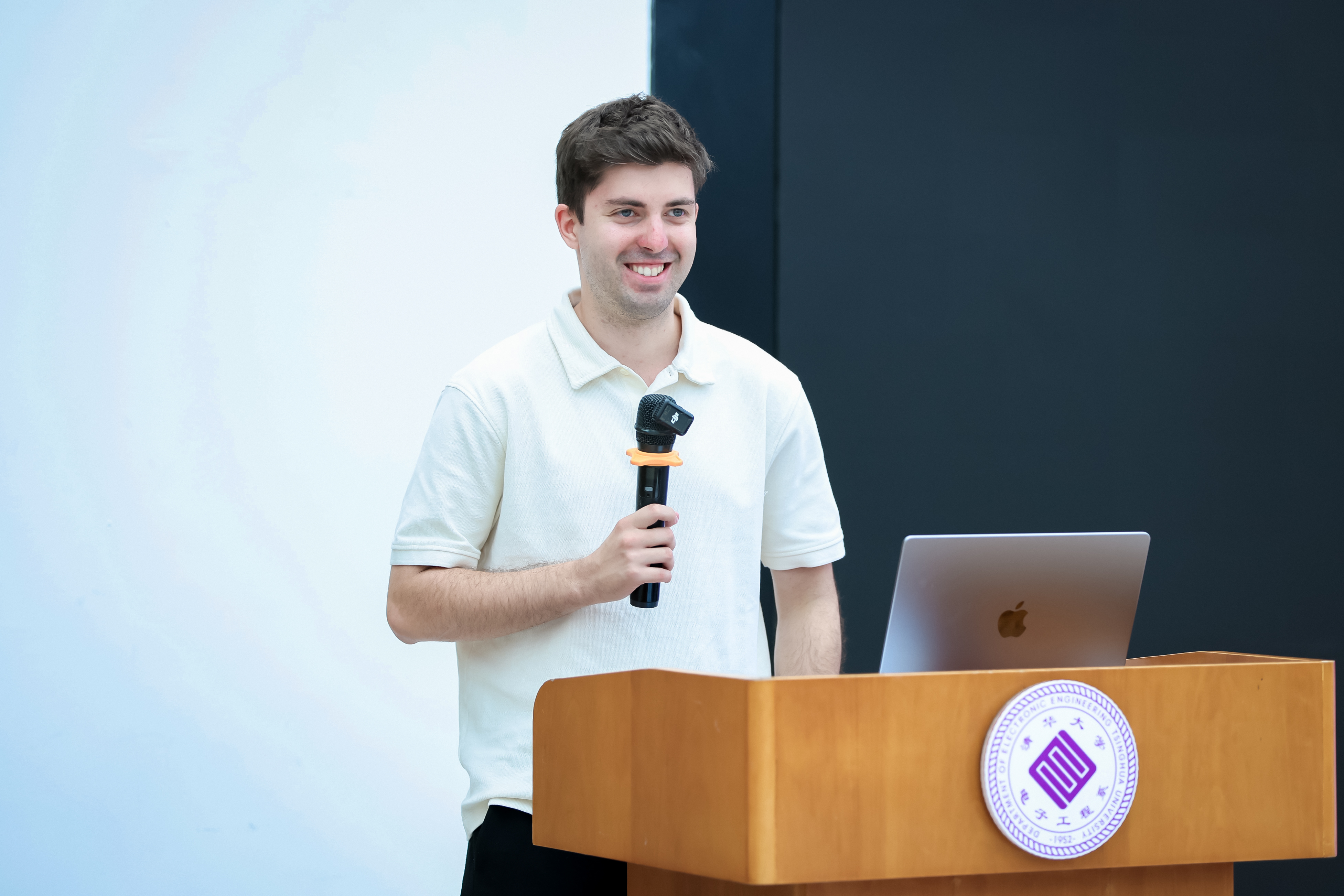
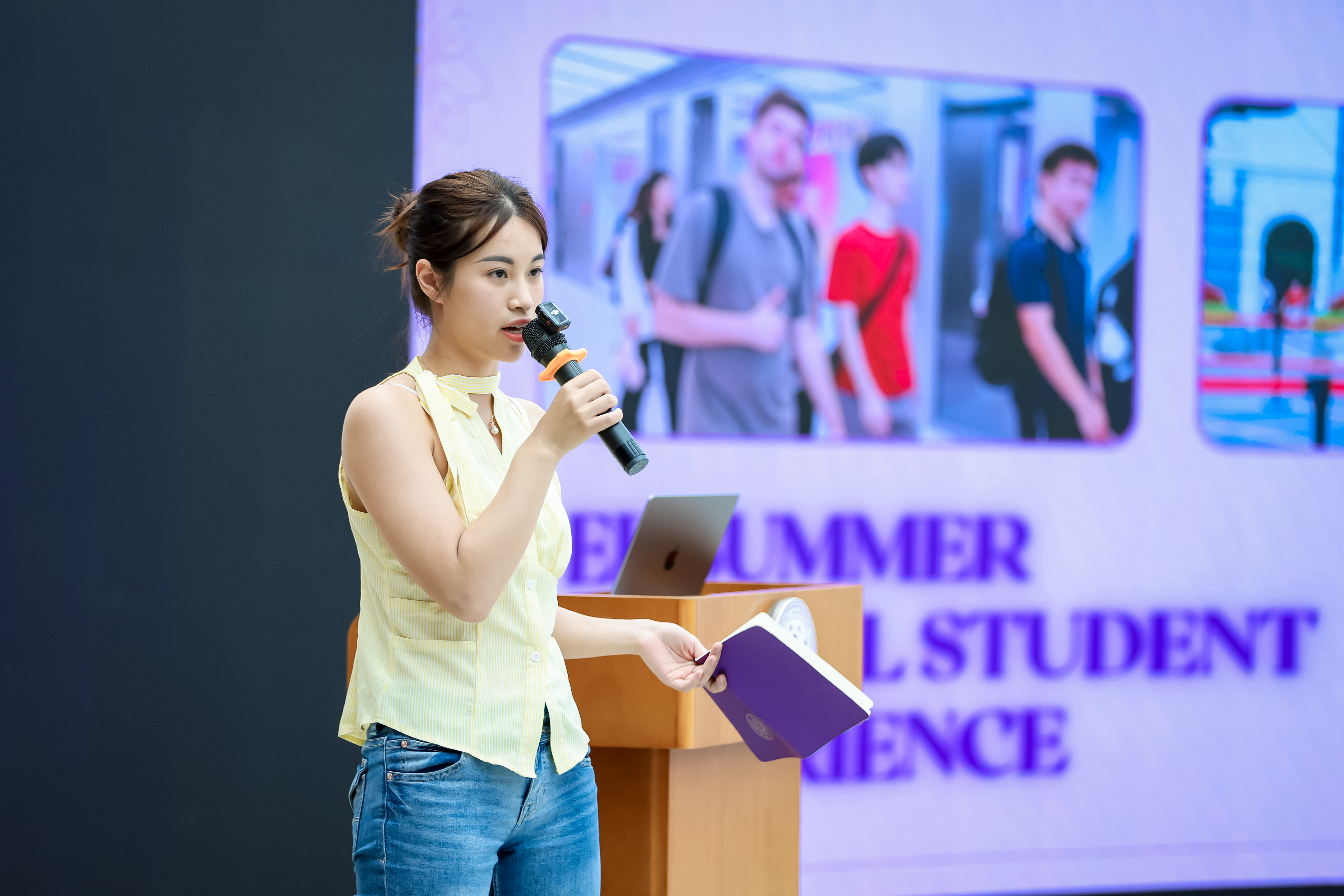
Summer school participants share their reflections.
IV. Certificate Ceremony and Closing
Prof. Zhang Milin and Prof. Henk Wymeersch jointly presented official certificates of completion to all participants. They also presented certificates to the student ambassadors, recognizing their dedicated support throughout the program — from technical mentoring and cultural guidance to logistical coordination.
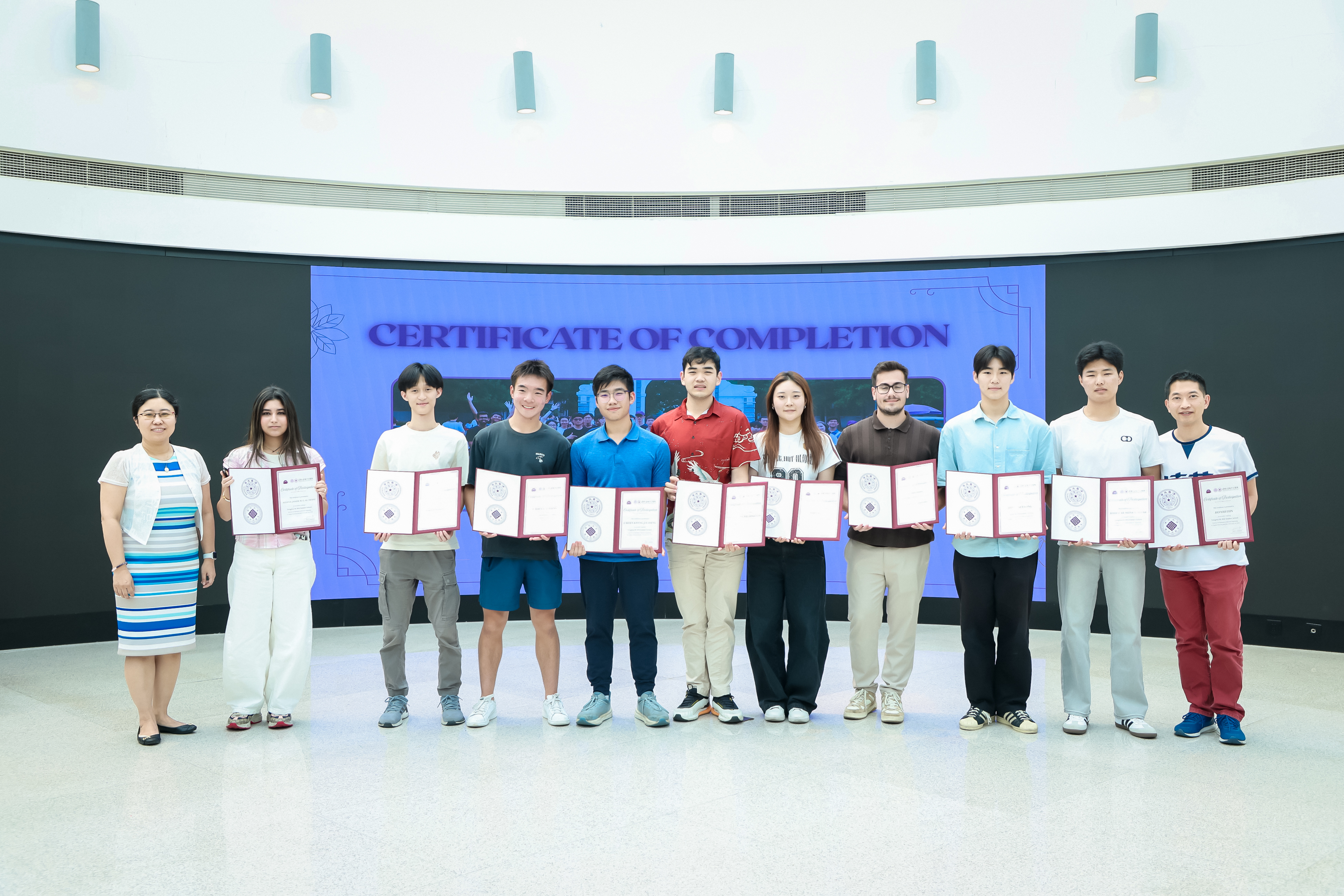
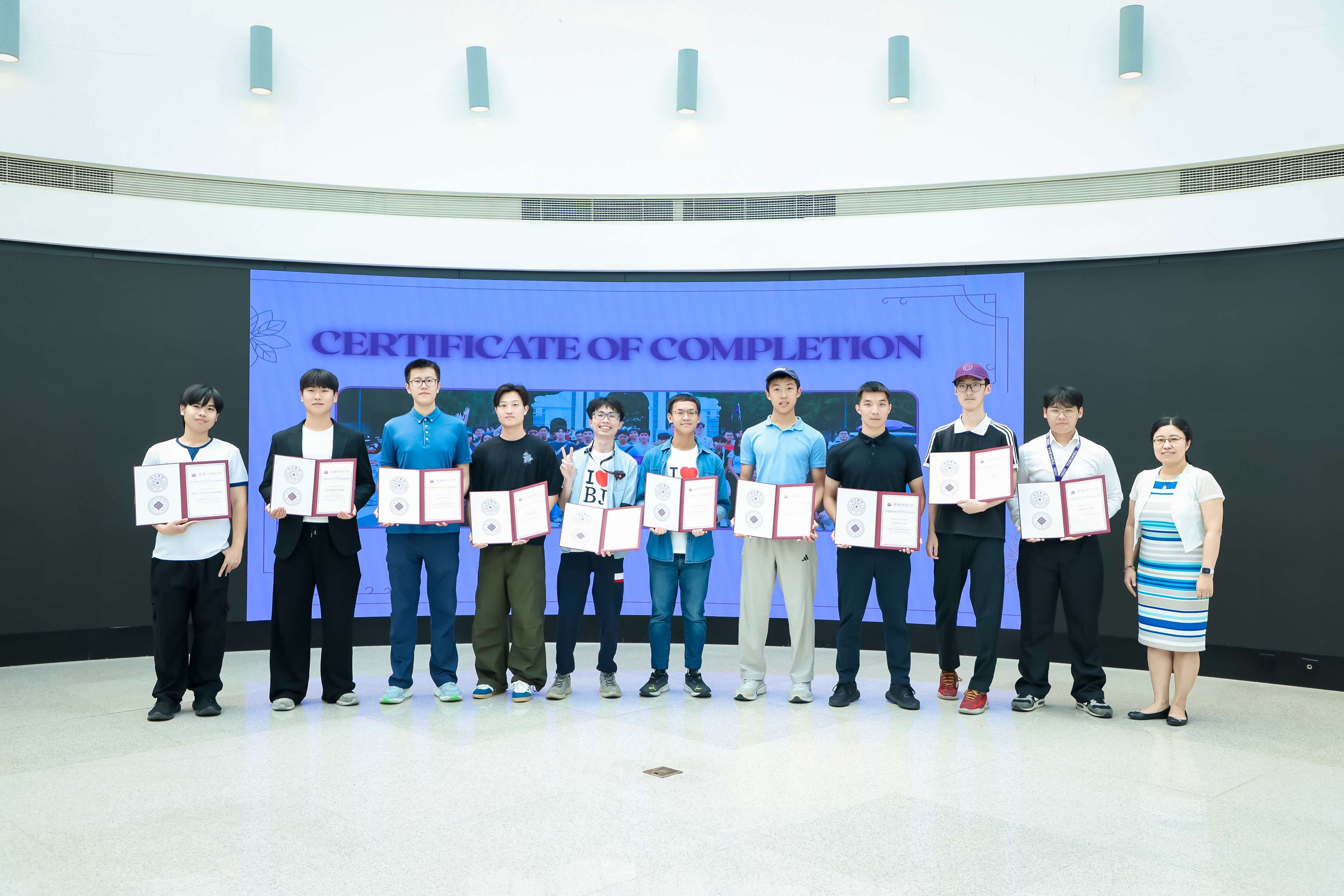
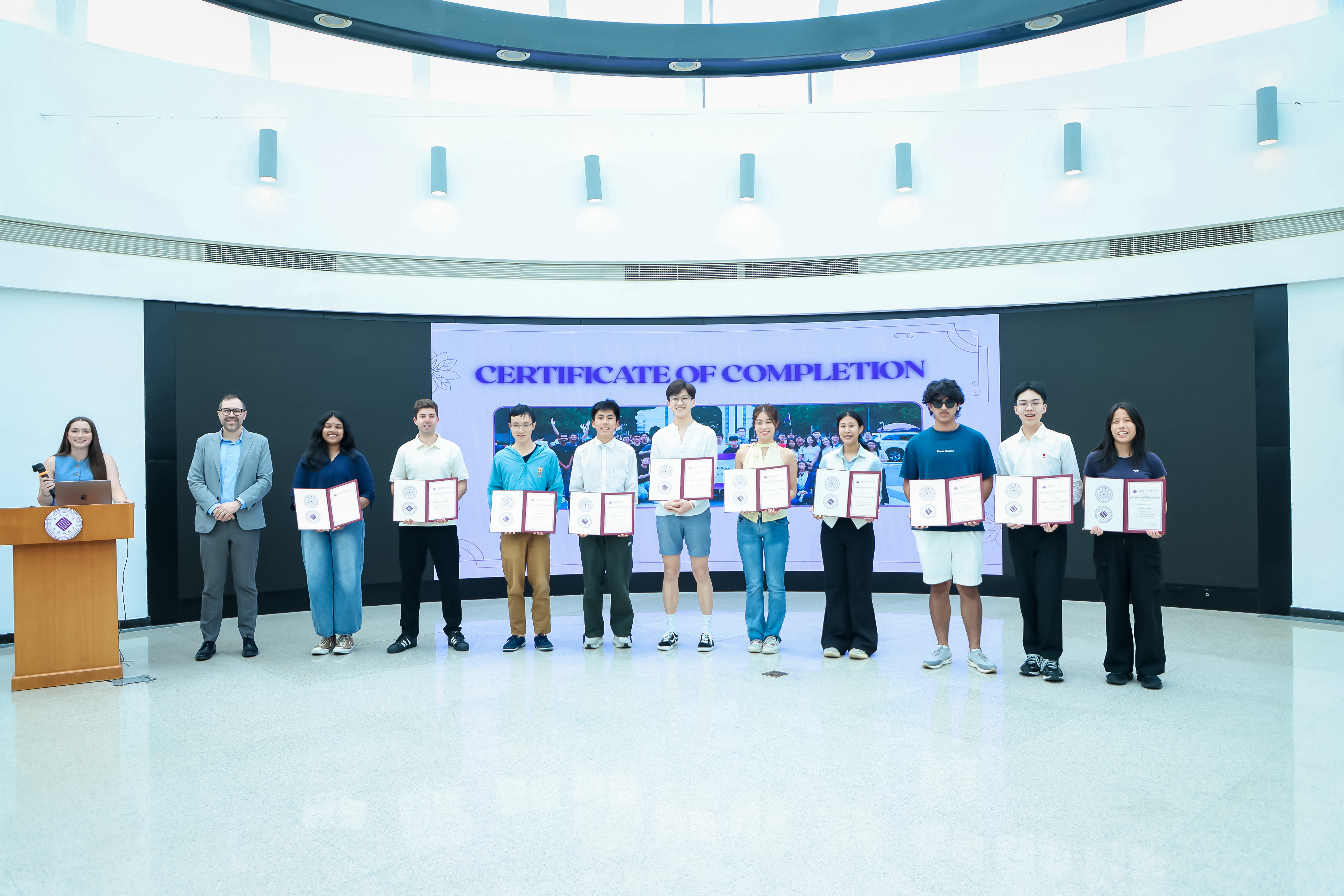
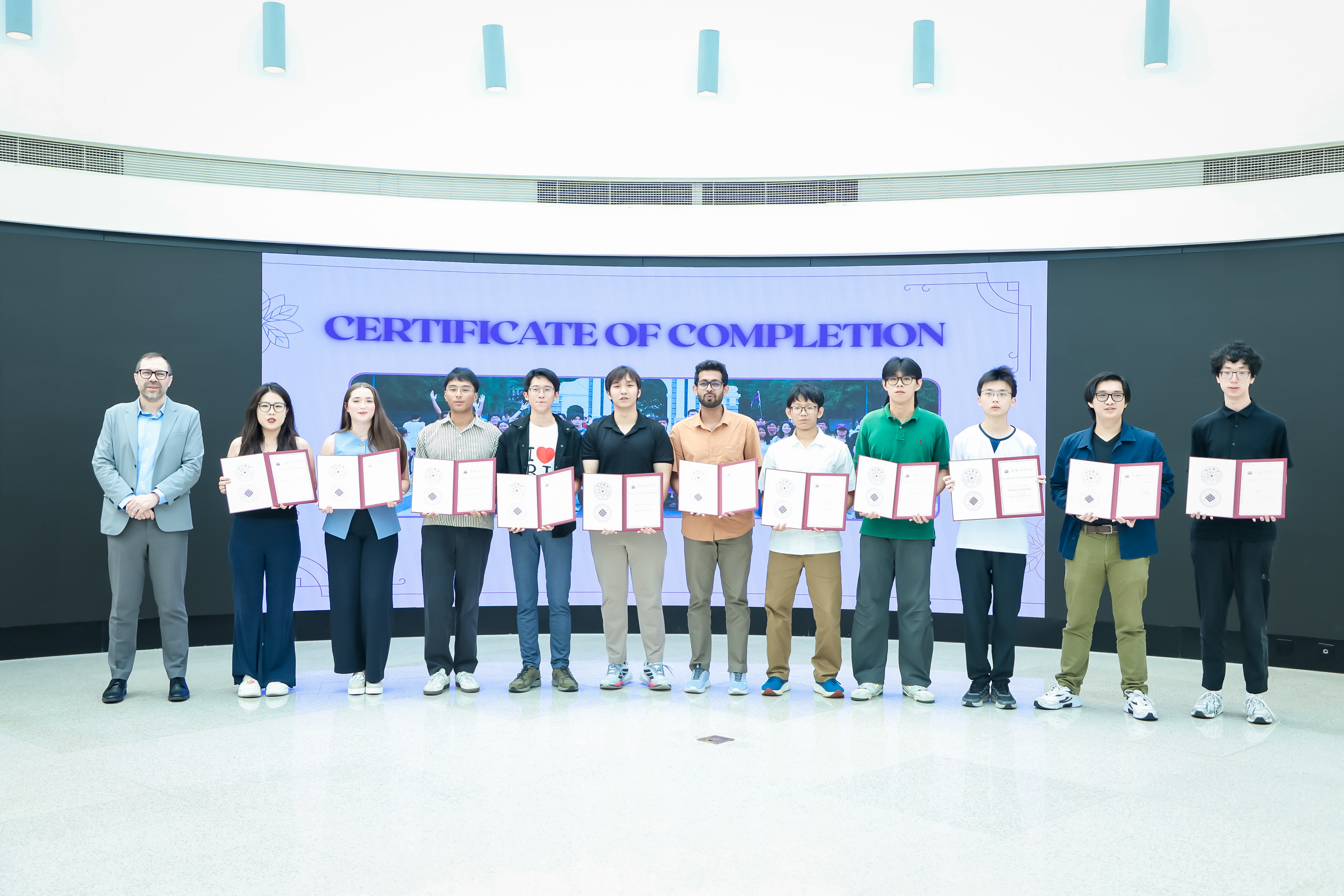
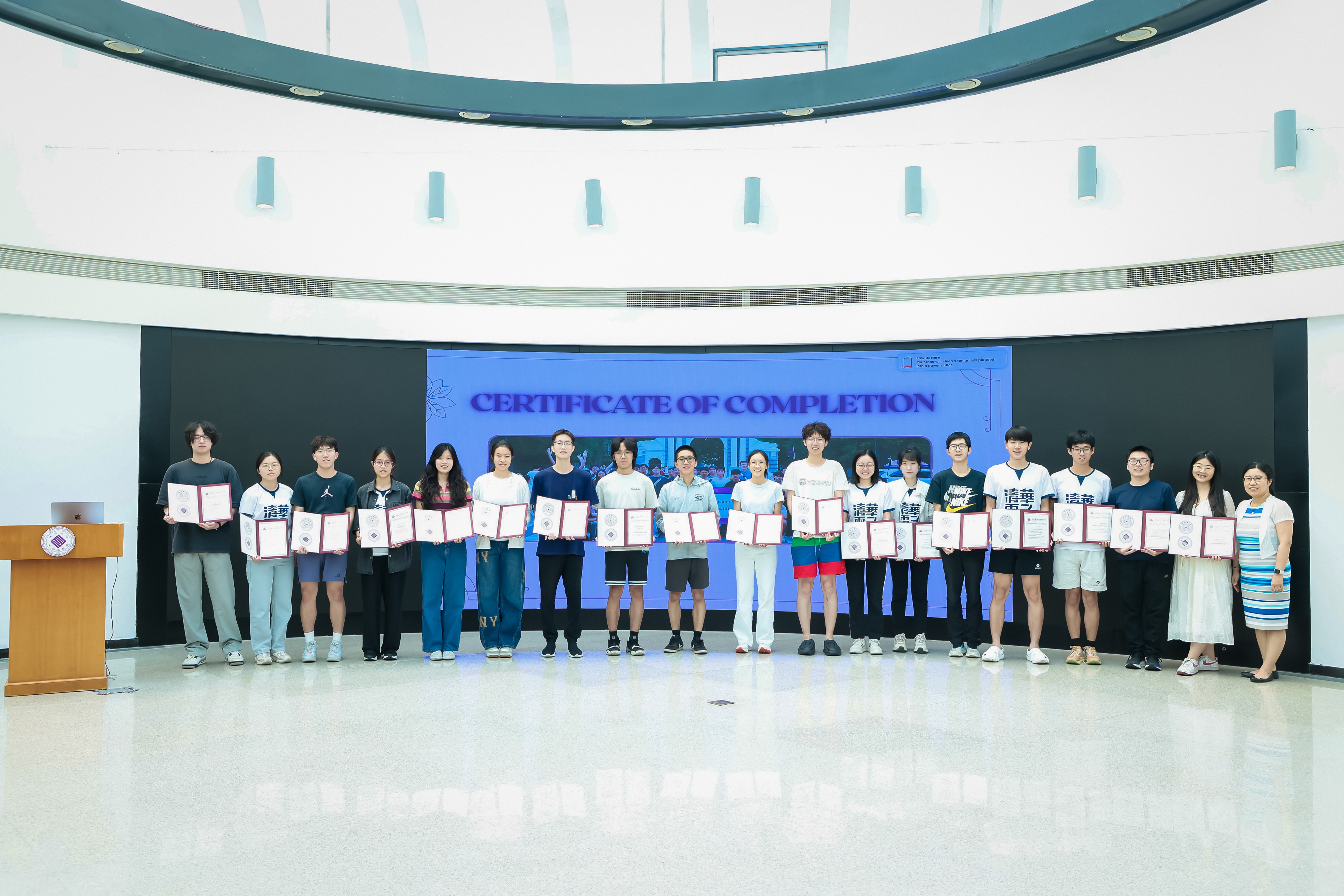
Prof. Zhang Milin and Prof. Henk Wymeersch present certificates to participants and student ambassadors
The ceremony concluded with an informal networking session, where students, faculty, and ambassadors exchanged ideas on future project development, research collaboration, and academic exchange opportunities. In a warm and celebratory atmosphere, the 2026 Tsinghua EE International Summer School officially came to a close.
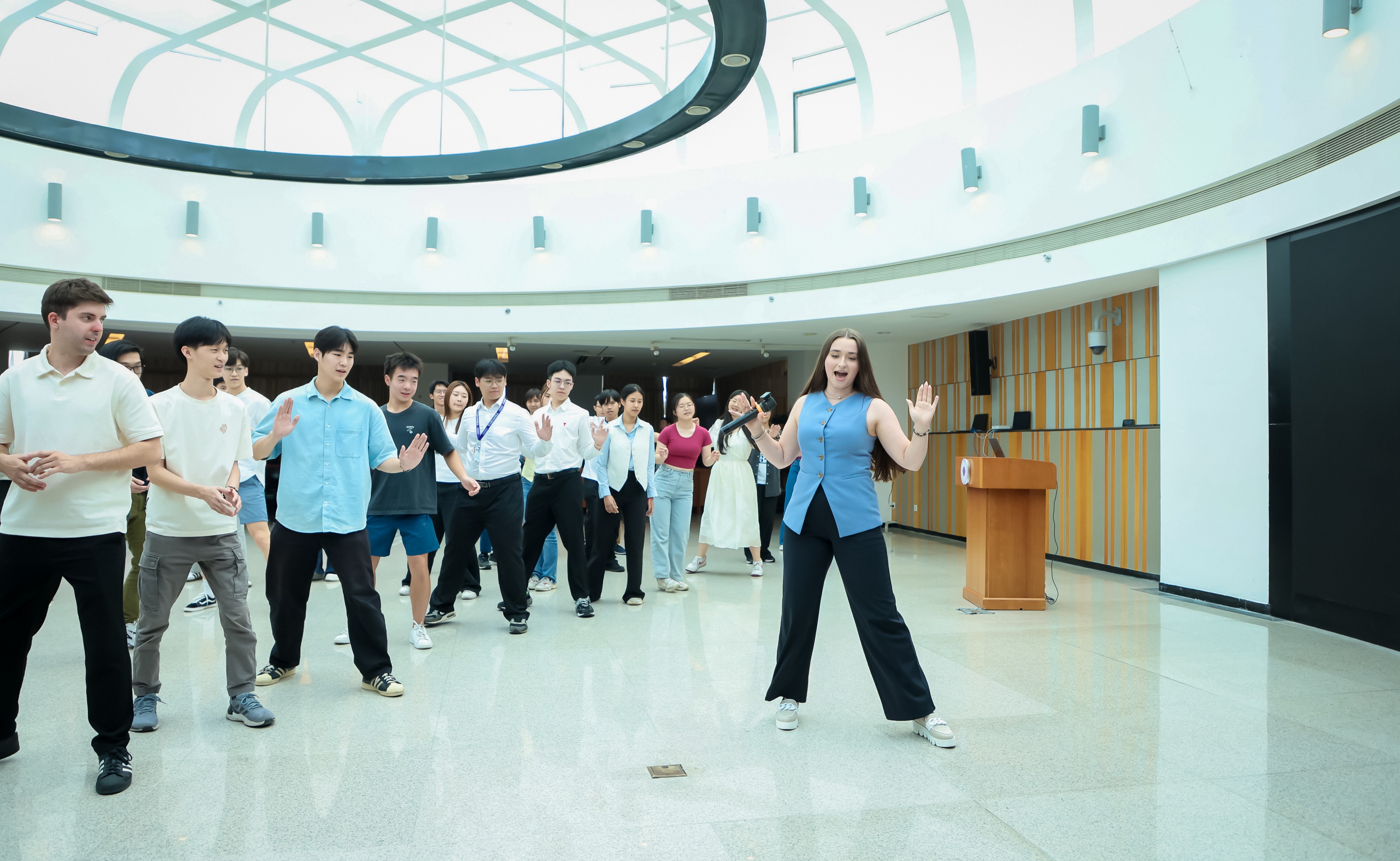
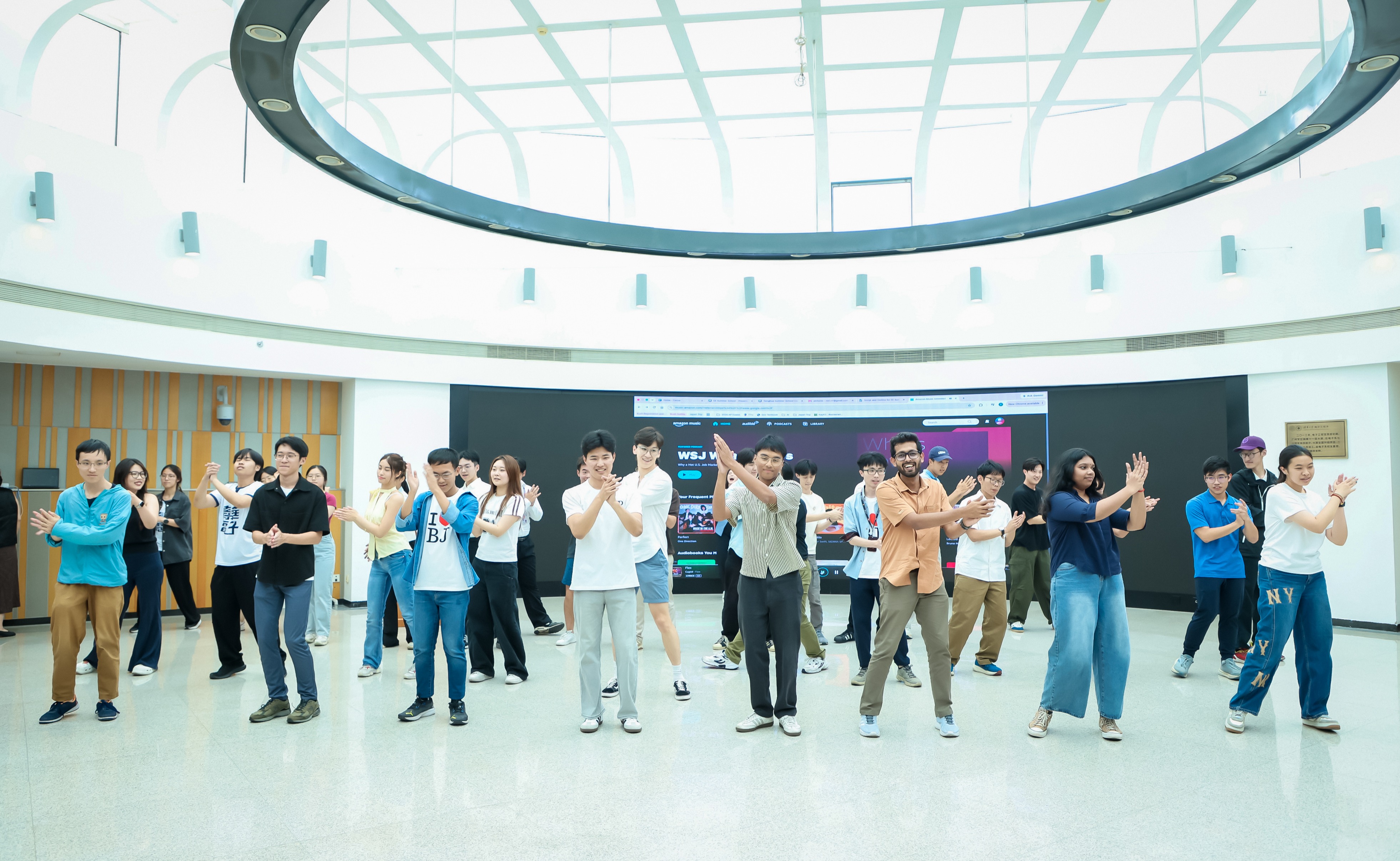
Summer school participants and student ambassadors celebrate together
Acknowledgments
We extend our sincere gratitude to Dr. Wei Zhenyu, an alumnus of the Department of Electronic Engineering, for his generous donation and long-standing support, which have been instrumental to the global development of the summer school. We also thank our industry partners — Infinigence AI for dedicated token resources, Agora for real-world dialogue datasets, and NeuraMatrix for wearable devices — for enabling an integrated learning pathway that connects leading academic lectures, industry site visits, and hands-on project development. We remain committed to building a borderless innovation platform for young global talents at the intersection of AI and sustainable development.