On November 24, 2024, the "Sub-forum I of the Tsinghua Alumni Entrepreneurship Achievement Matchmaking Forum: Low-Altitude Economy Industry Seminar & the 24th Department Alumni Forum," co-hosted by the Department of Electronic Engineering of Tsinghua University, the Department of Electronic Engineering Alumni Association of Tsinghua University, and the Tsinghua University Sichuan Chengdu Alumni Association, was successfully held in Chengdu, Sichuan.
Under the theme "Chengdu Skyline, Wisely Leading the Future," the forum aimed to foster academic exchange and experience sharing, jointly advancing the application of electronic information technology in the low-altitude economy. Leading figures from domestic universities and industry frontier gathered in Chengdu to discuss technological progress and industrial applications of the low-altitude economy. Leaders from Shudao Investment Group, Chengdu Hi-Tech Zone Science and Technology Innovation Bureau, Chengdu High-Tech Investment Group, China Hi-Tech Group, Orinno Capital, and other organizations were invited to attend. The event was hosted by Ma Lin, Deputy Secretary-General of the Department of Electronic Engineering Alumni Association and Managing Partner of SEE Fund.
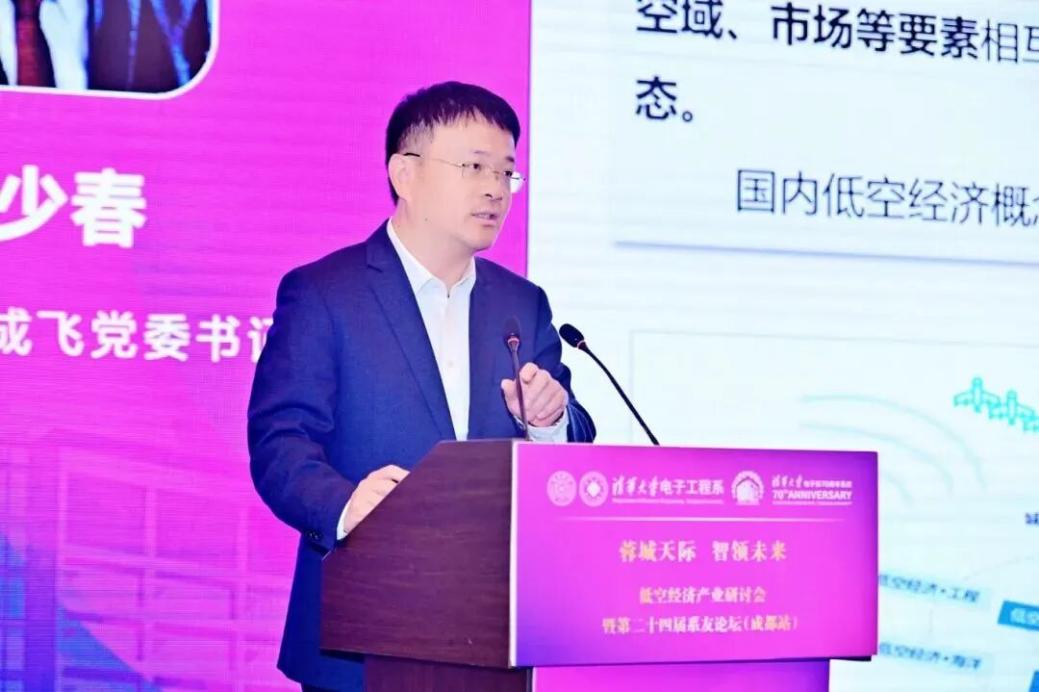
Shaochun Sui
Shaochun Sui, Party Secretary and Chairman of AVIC Chengdu Aircraft Industrial Co. Ltd (hereinafter referred to as “Chengfei”), provided a detailed introduction to the corporation's practices and reflections in the low-altitude economy. As a major military industrial high-tech enterprise, Chengfei not only focuses on its own development but also actively engages in the low-altitude economy, achieving notable results in drone technology applications, the construction of Sichuan Aviation Industry Park, and the development of Chengfei's Zigong drone industrial base. Additionally, Chengfei is actively exploring application scenarios for the low-altitude economy in areas such as emergency rescue and anti-drone operations, contributing valuable experience and insights to the development of the regional low-altitude economy.
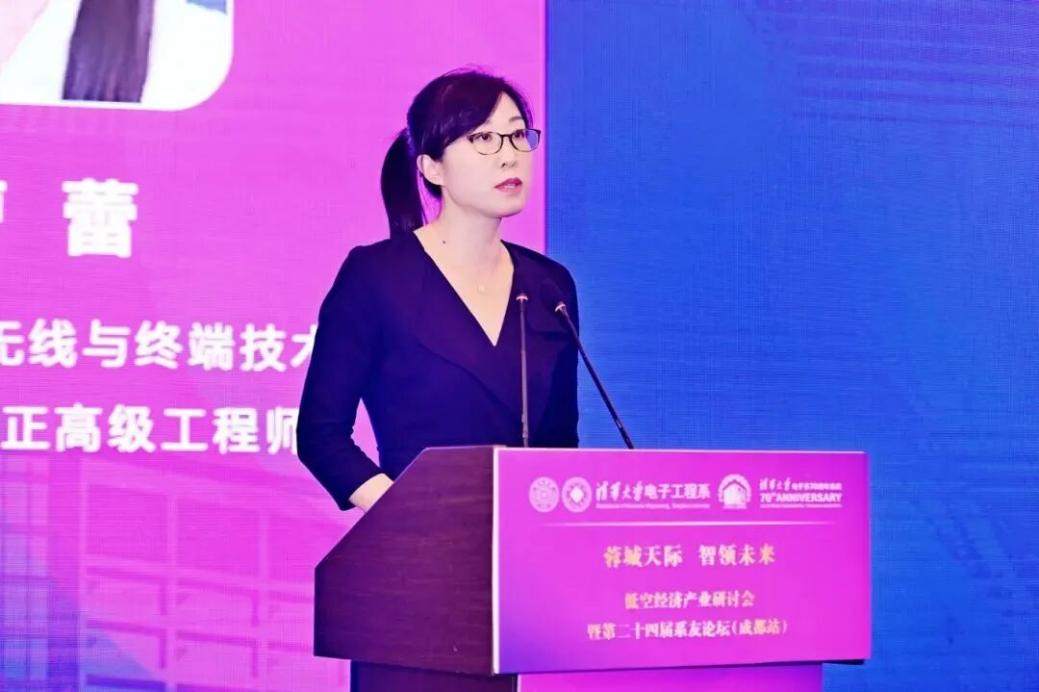
Lei Cao
Lei Cao, Deputy Director of the Wireless and Terminal Technology Institute at China Mobile Research Institute, discussed the vast possibilities in the field of low-altitude intelligent connectivity. She pointed out that low-altitude information infrastructure is key to driving the large-scale development of the low-altitude economy. China Mobile is committed to building a low-altitude digital intelligence new infrastructure with technological and scale leadership. Leveraging its resources in communications, navigation, sensing, control, terminals, AI, and security, China Mobile has developed a "four-wheel drive, two-wing escort" capability system for high-quality low-altitude economy development. This system is driven by terminals, networks, platforms, and applications, with AI and security as the two wings, comprehensively enabling high-quality development of the low-altitude economy. On the terminal front, China Mobile adopts a "terminals as entry point" approach, aiming to develop a diverse product matrix that is "network-connected, identifiable, and low-cost." On the network front, "networks as the foundation" leverages the world's largest low-altitude communication network, the world's largest 5G+BeiDou high-precision navigation network, and the world's first mid-high frequency sensing network to gradually achieve three-dimensional reliable communication coverage, wide-area high-precision navigation, and multi-dimensional integrated low-altitude sensing. On the platform front, integrating external and internal resources to build a low-altitude digital intelligence capability that serves regulation and empowers various industries. On the application front, focusing on ten typical scenarios: low-altitude logistics, air patrol and comprehensive governance, airspace regulation, emergency rescue, airport air defense, medical emergency, low-altitude agricultural technology, low-altitude firefighting, low-altitude mobility, and aerial sightseeing. By creating integrated solutions and benchmark demonstration applications, China Mobile aims to drive large-scale development of low-altitude businesses. Furthermore, Cao Lei emphasized that security is the foremost prerequisite for the current development of the low-altitude economy, while AI is the innovation engine driving efficient development. China Mobile will fully leverage its advantages in data, computing, and intelligence, as well as its rich experience in security assurance and service operations, to support the development of efficient and high-quality low-altitude capabilities and ensure the healthy and orderly growth of the low-altitude economy.
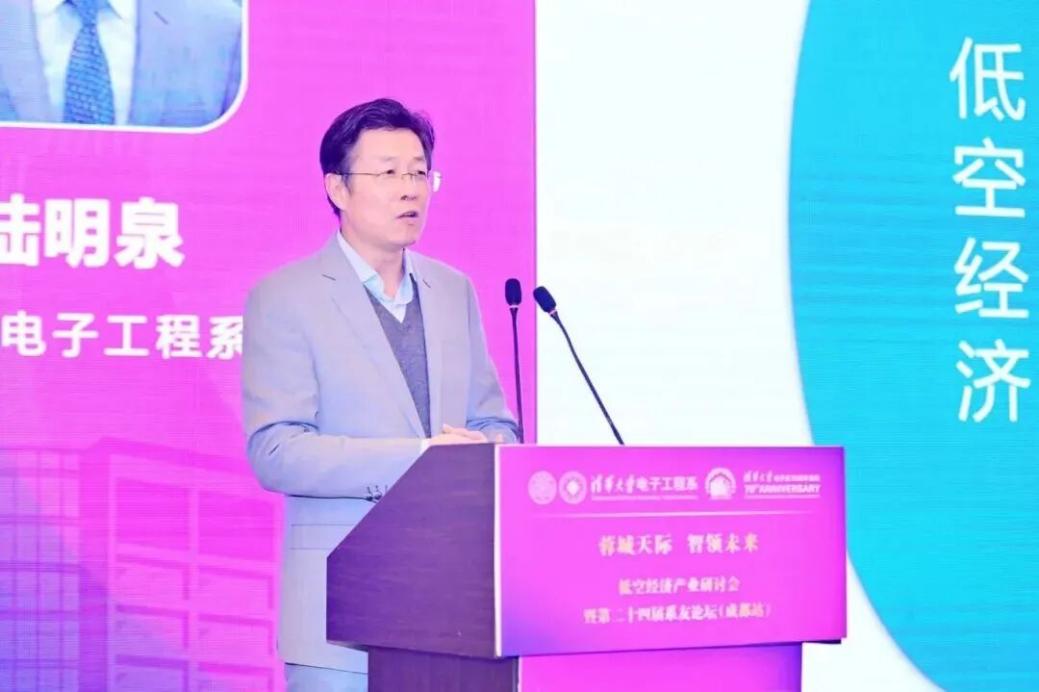
Mingquan Lu
Professor Mingquan Lu from the Department of Electronic Engineering at Tsinghua University, based on an analysis of the navigation and positioning performance requirements for autonomous unmanned aerial vehicles and intelligent low-altitude traffic control in the low-altitude economy, focused on the current state and gaps in China's navigation and positioning infrastructure. He pointed out that navigation and positioning technologies for the low-altitude economy should be developed systematically from space-based, inter-vehicle, and ground-based perspectives. The focus should be on further tapping the potential of existing space-based systems, developing new inter-vehicle networks, and building high-performance, low-cost ground-based regional positioning systems. By integrating absolute positioning, relative positioning, and proprioceptive sensing in a heterogeneous manner, the high-precision, high real-time, high-robustness, and high-safety navigation and positioning requirements of low-altitude aircraft can be met. Professor Lu also introduced the latest progress in cooperative positioning for the low-altitude economy based on his team's research, achievements that are of great significance for advancing the low-altitude economy.
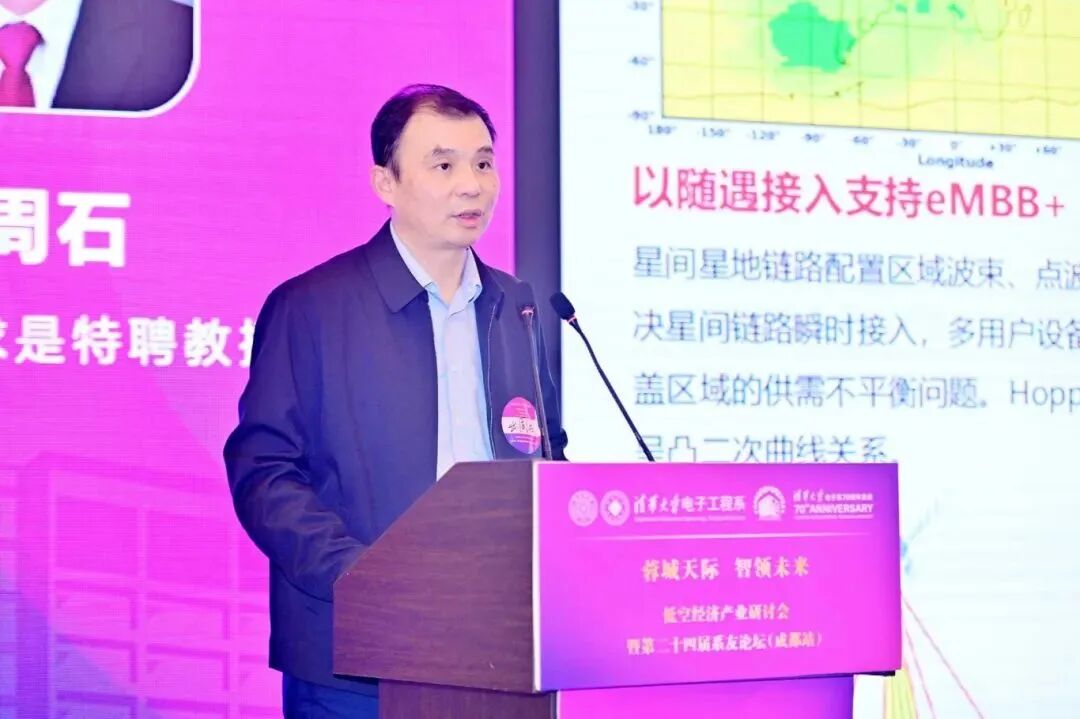
Zhoushi Yao
Professor Zhoushi Yao, Qiushi Distinguished Professor at Zhejiang University, outlined the prospects of satellite internet communication technology and its supporting role in the low-altitude economy. He noted that the integrated development of satellite internet with ground and aerial networks has become a new model for enabling the low-altitude economy. To meet the service needs of low-altitude intelligent networks, he discussed an air-space collaborative network architecture based on satellite internet and low-altitude networks, including system functions and operating mechanisms, aiming to build a collaborative network operating environment that integrates communication, sensing, and computation, combines communication, navigation, and remote sensing, enables cross-domain collaborative processing, supports cloud-edge collaborative computing, and provides air traffic management and flight safety services. Professor Yao also analyzed specific application scenarios for satellite internet supporting the low-altitude economy and identified major technical challenges in building air-space collaborative networks from perspectives such as service systems, network architecture, air interface technologies, communication assurance, integrated sensing and communication, and intelligent computing services, providing important references for future satellite internet low-altitude service capability development.
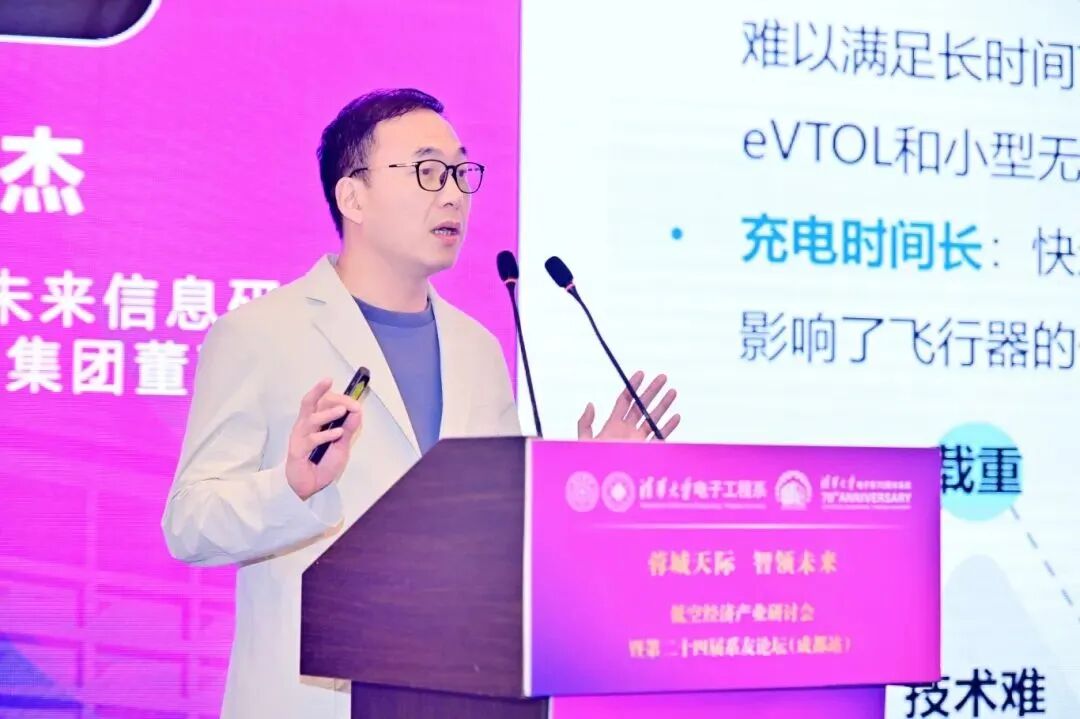
Junjie He
Junjie He, Executive Dean of the Future Information Institute of the National Torch Academy of Science and Technology and Chairman of Able Surplus Group Holdings Co., Ltd., noted in his speech that while countries around the world are actively promoting the low-altitude economy, there are few actual implemented projects. The main reasons for this phenomenon are: first, regulatory policy restrictions; second, a lack of business models; and third, insufficient related services and support systems. To address these issues, Junjie He proposed a strategy of building a low-altitude economy ecosystem. To overcome regulatory non-liberalization, Able Surplus is building flight service stations and developing anti-drone systems to break through air traffic control technical bottlenecks. To address the lack of clear business models, the group is conducting research on multi-network integration technologies for three-dimensional transportation systems, as well as infrastructure and route planning, to clarify the role of the low-altitude economy in the transportation system. To remedy insufficient service support, measures such as drone pilot training, insurance services, maintenance support, and talent development are being implemented to strengthen the low-altitude economy industry chain. Using Jiangmen City's planning practice as an example, He demonstrated that these measures can effectively address the three major obstacles to low-altitude economy development, providing strong support for successful implementation.
Next, seven high-energy technology companies in the low-altitude economy sector participated in the roadshow segment, hosted by Qin Chuan, Vice President of XinHua Fund. Seven projects—Shine Tech, Space Matrix, Blazer Tech, Sky Defence, Hover Wing, Navisech, and Loca Wave—made presentations covering project backgrounds, industry trends, technical and product advantages, industrial implementation, and cooperation needs. Meanwhile, dozens of investment institutions were invited to the roadshow, engaging in in-depth discussions with the project teams on core technologies, product market size, financing needs, and more, offering advice for project development and negotiating further cooperation.
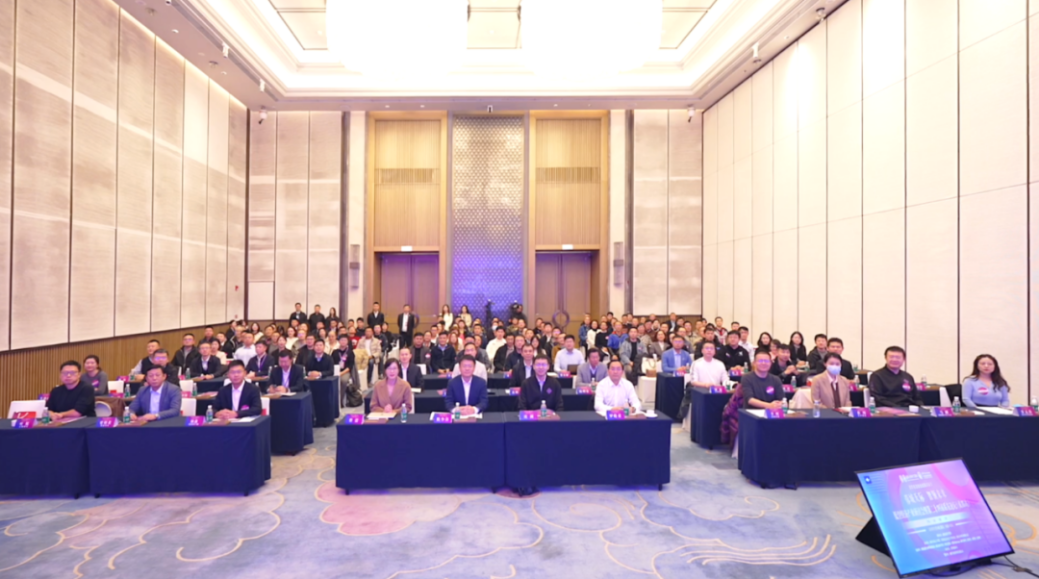
Group Photo of the Forum
The Department of Electronic Engineering Alumni Forum of Tsinghua University is an academic gathering that brings together academia, industry, and alumni, serving as a platform for enterprises from various fields to present exciting reports. The forward-looking and diverse themes of the forum, along with the growing number of participants year after year, have effectively promoted mutual understanding among industry, academia, and research, shortened the gap between educational theory and practice, enhanced exchanges between technology and capital, and injected vitality into industrial development. Since its inaugural event in 2014, the Department Alumni Forum has been successfully held 24 times, becoming a platform for discussing academic frontiers and research hotspots, as well as an important bridge connecting alumni of the Department of Electronic Engineering to their alma mater.