原文来自无限之声:
https://mp.weixin.qq.com/s/6HUizRLjPoXPEx0YNM22HQ
01 Event Introduction
The Software Design Competition, organized by the Software Division of the Student Science and Technology Association, Department of Electronic Engineering, Tsinghua University, is a major event that has been successfully held for eight sessions. This year's Bambu Lab Cup·Tsinghua University 9th Software Design Competition is sponsored by Bambu Lab. Since its inception, the competition has consistently aimed to inspire students' creative potential, enhance software development skills, and cultivate solid software engineering practices. With a vibrant and free-spirited atmosphere, the competition is widely loved and well received by students, becoming one of the most influential technology events on campus.
02 Competition Summary
The 9th Bambu Lab Cup has now come to a successful close. Throughout the development process, participants overcame numerous challenges, improved their abilities through self-directed learning and collaboration, and ultimately presented an impressive array of high-quality works to the audience and judges.
We believe that during this memorable journey, everyone not only gained professional knowledge and technical skills but also experienced the joy of teamwork, forged friendships, and created lasting memories.
Let us look forward to an even more exciting competition next year!
03 Award-Winning Works
Following outstanding presentations and defenses on April 11, the competition awarded one Grand Prize, two First Prizes, four Second Prizes, eight Third Prizes, and one prize each for Best 3D, Best Collaboration, Best Art, and Best Tool.
Grand Prize & Best Tool Award: Malim by Xiao Li
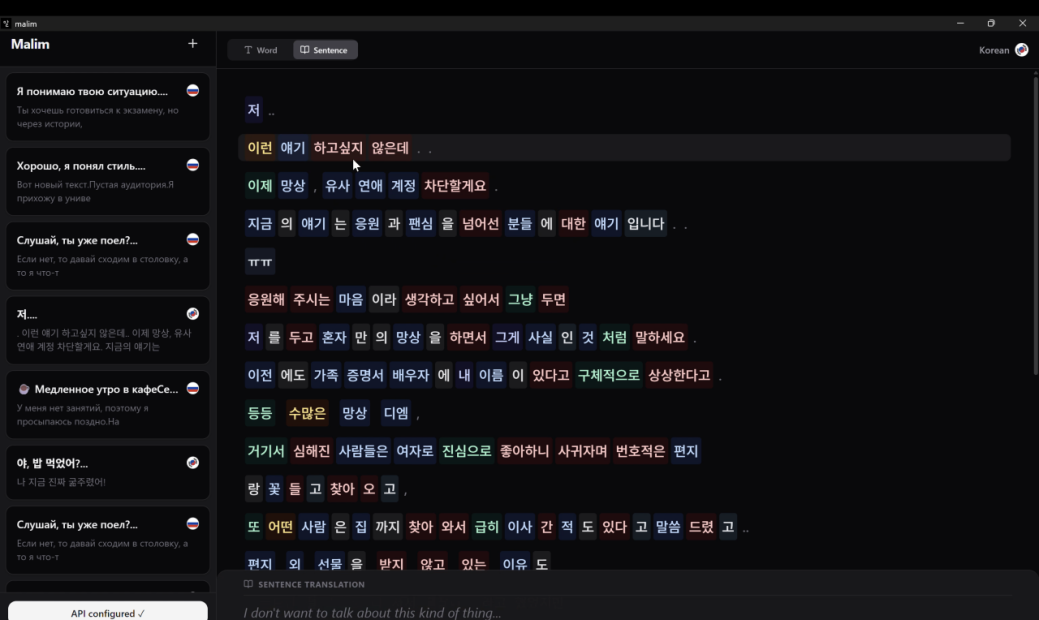
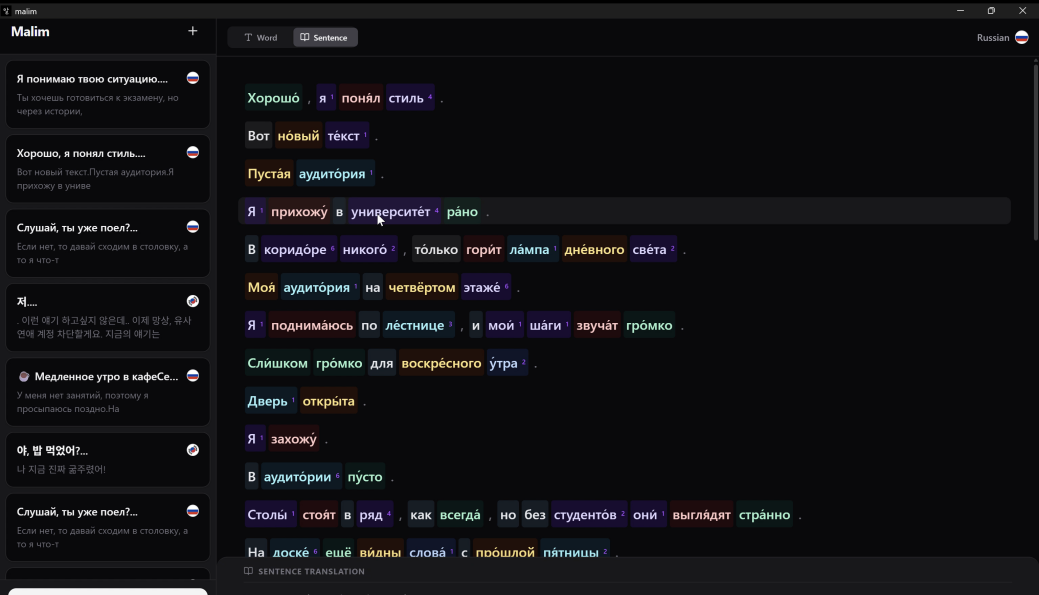
Malim is a language learning app that helps users learn languages by simulating a native-speaking environment. The front end uses Svelte + TypeScript, the back end is built on Rust (Tauri framework), and it integrates Silero TTS and other speech synthesis services to provide a cross-platform (Windows and Android) language learning environment.
The software aims to help users move away from rote memorization of words and grammar rules by providing large amounts of comprehensible input, simulating "statistical" language learning as in a native environment. It currently supports Korean and Russian: users can import any text, which is automatically parsed and marked for parts of speech, noun properties (gender in Russian), declension (Russian), and Chinese roots (Korean). Tapping on a word or sentence displays the definition, grammatical features, and plays cached audio, enabling both visual and auditory memory. Future plans include more accurate sentence segmentation and AI-assisted sentence correction to complete the input-output learning loop.
First Prize: BrightBlack by Jun Yang, Guoxuan Wang, Gang Wang
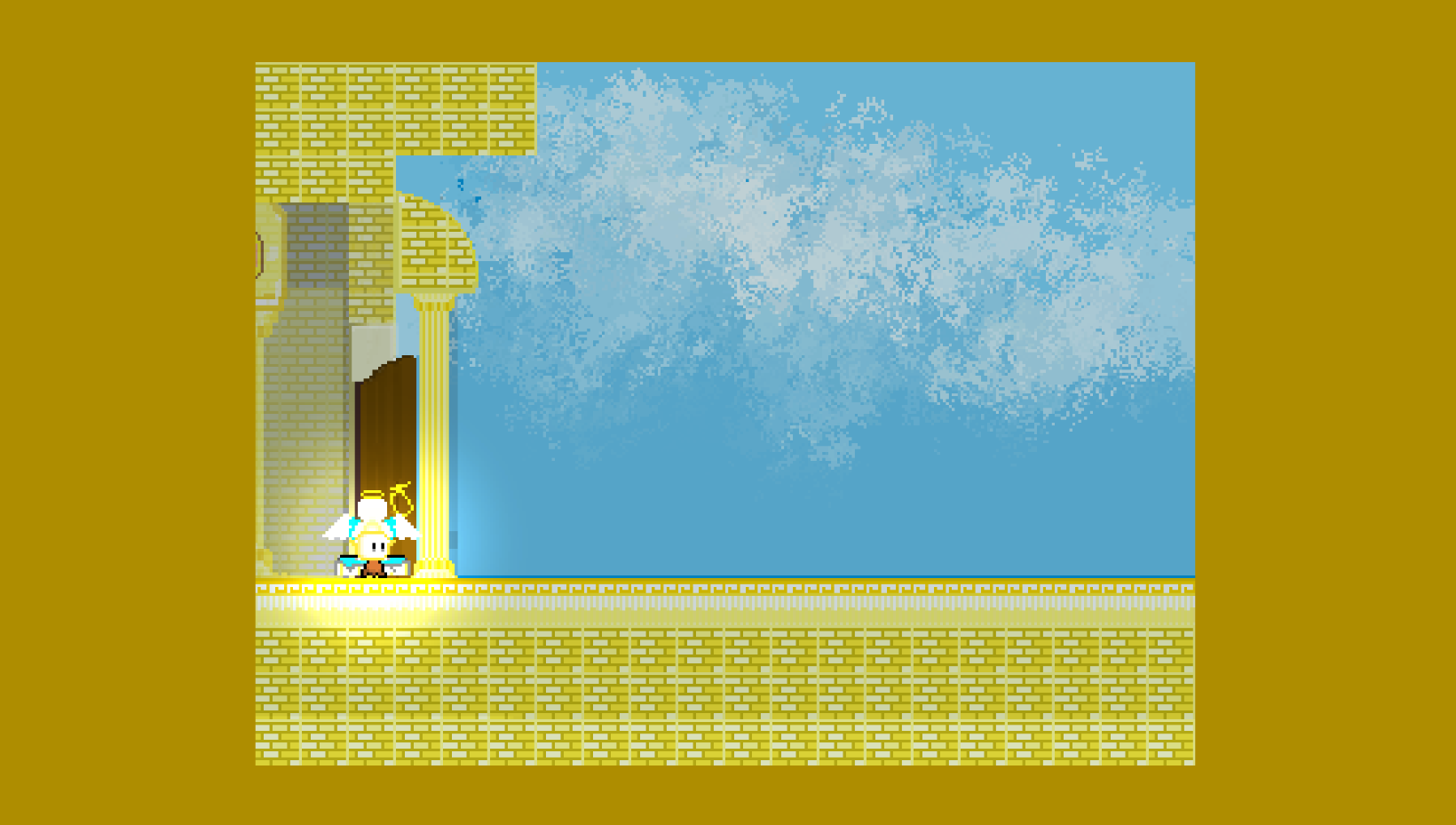
BrightBlack is a 2D pixel-art Metroidvania-style puzzle game developed with Unity Engine 1.8.0. Players can control a small light spirit living peacefully in the City of Light until its shadow becomes eerily dark. The game adopts a "knowledge lock + ability lock" structure, encouraging players to discover new uses for abilities and hidden world traits as they progress. Core gameplay revolves around switching between light and dark attributes (H key): in light mode, the character can fire light balls; in dark mode, it can dash forward. The map includes destructible walls, 45° mirrors, laser emitters, light-ball projectors, and various switches, requiring players to combine them to solve puzzles. The game supports multiple save slots (JSON serialization), global audio management, and respawn at checkpoints.
First Prize & Best Art Award: Eastern Miasma Voyage by Yujie Xiao, Wending Zhang, Ning Bai
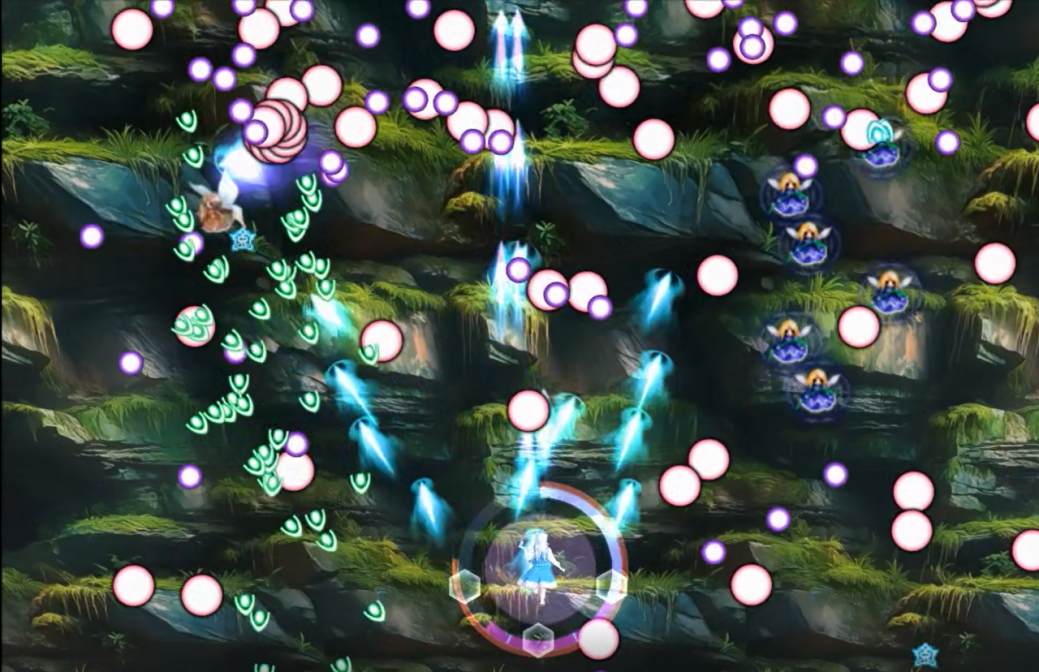
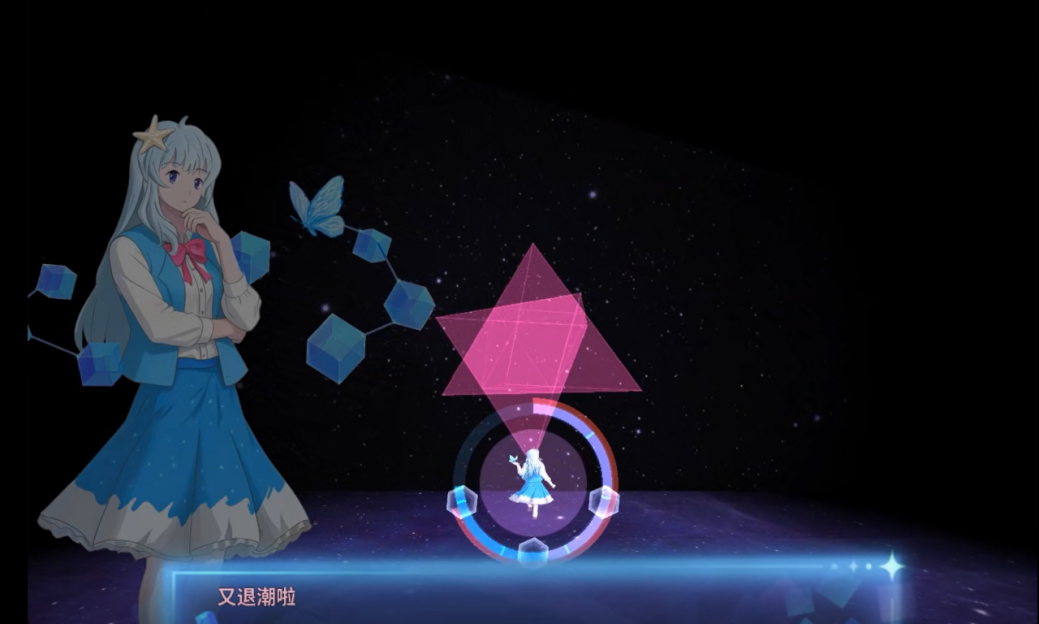
Eastern Miasma Voyage is a Touhou Project fangame that combines STG bullet-hell shooting with "eating and growing" mechanics. Players take on the role of an artificial intelligence wreckage that has drifted into Gensokyo from the outside world, gradually gaining physical form and consciousness by absorbing information, dodging bullets, and devouring enemies, while exploring the meaning of its own existence. The plot and gameplay are deeply integrated: enemies, items, and level mechanics all reflect concepts such as information quality, optimization direction, and data overload in AI training, creating a unique philosophical experience.
The game uses a classic layered design, developed with the LuaSTG Sub engine and Lua scripts, and supports title screens, practice modes, replays, and other systems. It features four main stages, a complete storyline with multiple endings, and original music and art assets, exploring themes of memory, consciousness, and the "infinite possibilities" of Gensokyo.
Second Prize: Texas Duel by Siming Qin, Zhiyao Xu
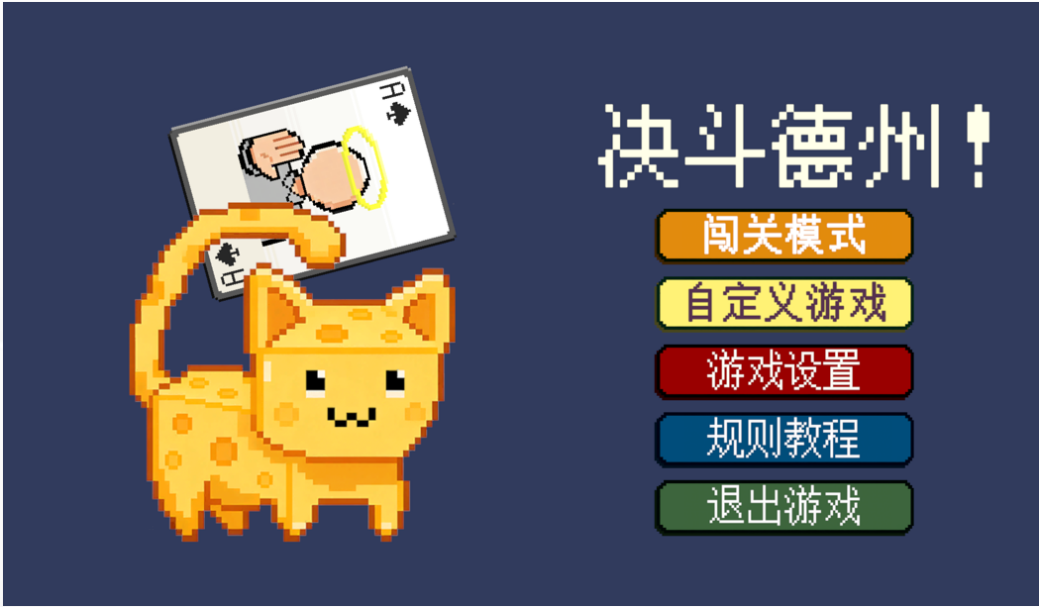
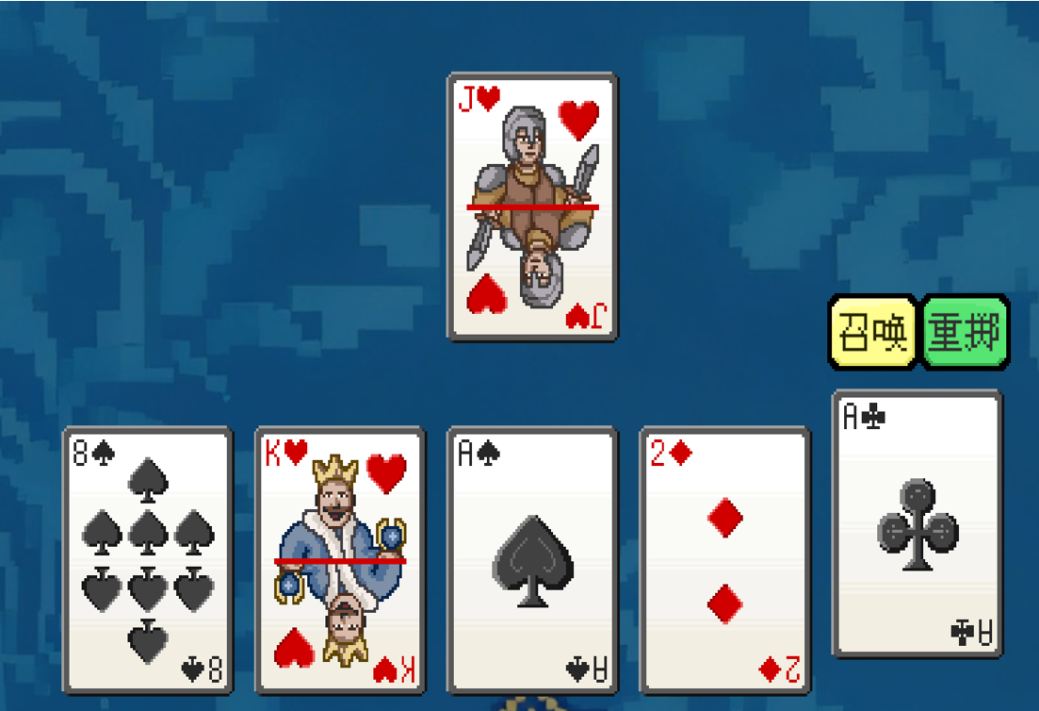
Texas Duel is a Windows single-player game that combines Texas hold'em card hands with turn-based strategic combat, developed with Unity + C#. The game uses poker hand rankings (pair, full house, straight, royal flush, etc.) as attack methods; the opponent must respond with an equivalent hand to counter or take damage. It includes a custom mode and a roguelike challenge mode where players face nine AI enemies, each with unique abilities and decision-making capabilities, before finally confronting the ultimate boss, "Divinity."
Second Prize & Best Collaboration Award: Beauty or Death by Shikun Xu, Rongfeng He, Weiyao Pang
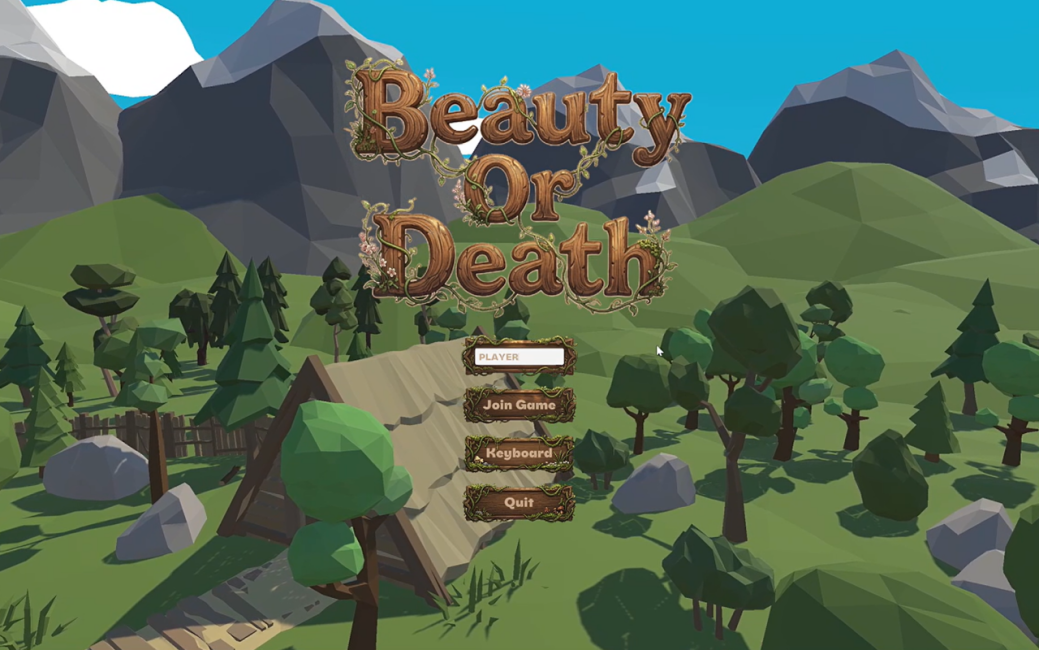
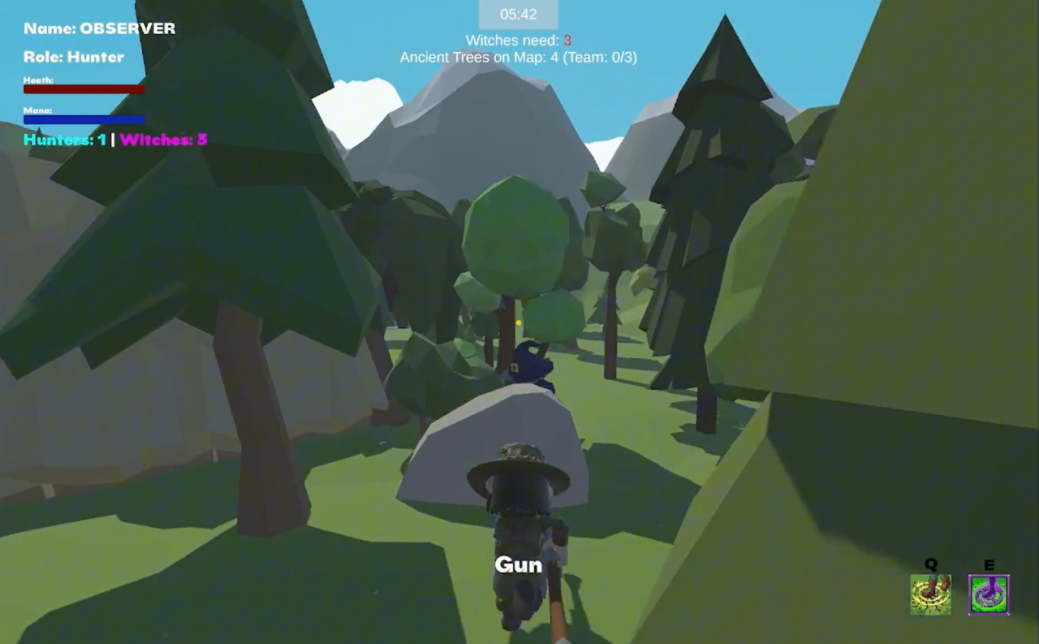
Beauty or Death is a strategic and fun asymmetrical multiplayer game set in a low-poly, pixel-art fairy-tale forest world that is both healing and mysterious. Players are divided into witches and hunters, engaging in a fast-paced five-minute battle around the ancient Tree of Life. The game blends disguise, puzzle-solving, and survival elements, offering a unique "transformation" mechanic and skill system that delivers a highly differentiated multiplayer experience.
Abundant items (Life Amulet, Flying Broomstick, Invisibility Cloak) and weapons (Shotgun, Honey Gun) are provided, along with support for players to create rooms, play online, and chat via text. From character animations to victory dances, every detail has been carefully polished, and detailed key guides ensure players can quickly get started.
Second Prize: Wolf Fort Mystery by Tianlin Zeng, Xiangyu Li, Wenqing Wang


Wolf Fort Mystery is an ARG-style web-based puzzle game. You play as Tongxue Mou, an ordinary high-school student at Wolf Fort No. 1 High School. Using mysterious codes left by a missing classmate, you infiltrate the "campus information network" to uncover the truth. The game abandons traditional quest markers; you must browse forums, search archives, and decode encrypted emails like a hacker or detective, piecing together the complete mystery from fragments. There are three endings, determined solely by the choice you make at the very end. The game is purely web-based, requires no download, and is best played on a PC browser (mobile-optimized). It takes about two hours, with no timers or failure states.
Second Prize: Nonexist by Chutian Mei, Zehong Li, Ziheng Zhang

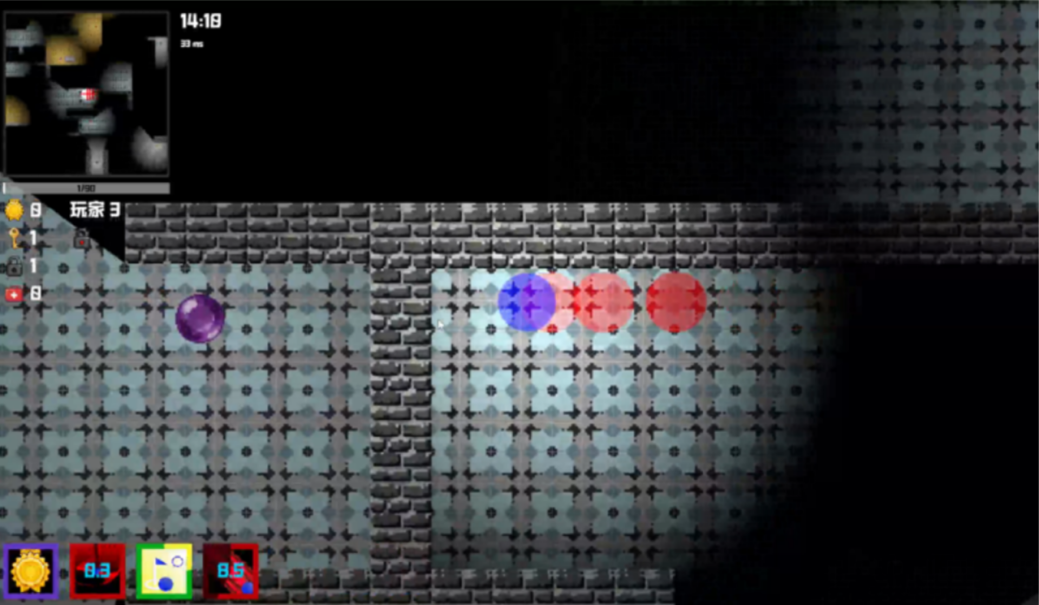
Nonexist is a multiplayer casual competitive game centered on "existence and observation." Players exist in a Nonexist world where they cannot see each other. To win, they must collect "Proofs of Existence" and reach the "Gate of Existence" to be the first to prove their own existence.
The game offers two modes: Constant Epoch, where proofs are picked up directly, and Chaotic Epoch, which alternates between day (collect keys) and night (collect shackles); combining a key and a shackle yields a Proof of Existence. During the night, players must also merge their shadow with their body to escape. Players can freely switch among three speed levels - the faster they move, the more afterimages they leave and the more damage they take. The map contains chests, traps, elevators, and other interactive elements, along with 15 combinable skills covering movement, information, damage, and special effects (e.g., blink, invisibility, laser, refresh), enabling skill combos for counterplay and cooperation. The game features a multiplayer online architecture, supporting room creation and joining. With its unique information-gameplay dynamic of "mutually invisible but traceable," it delivers a competitive experience blending strategy, stealth, and pursuit.
Third Prize: Seed: TideRain by Ziliang Fu, Xi Yan, Yanxu Du
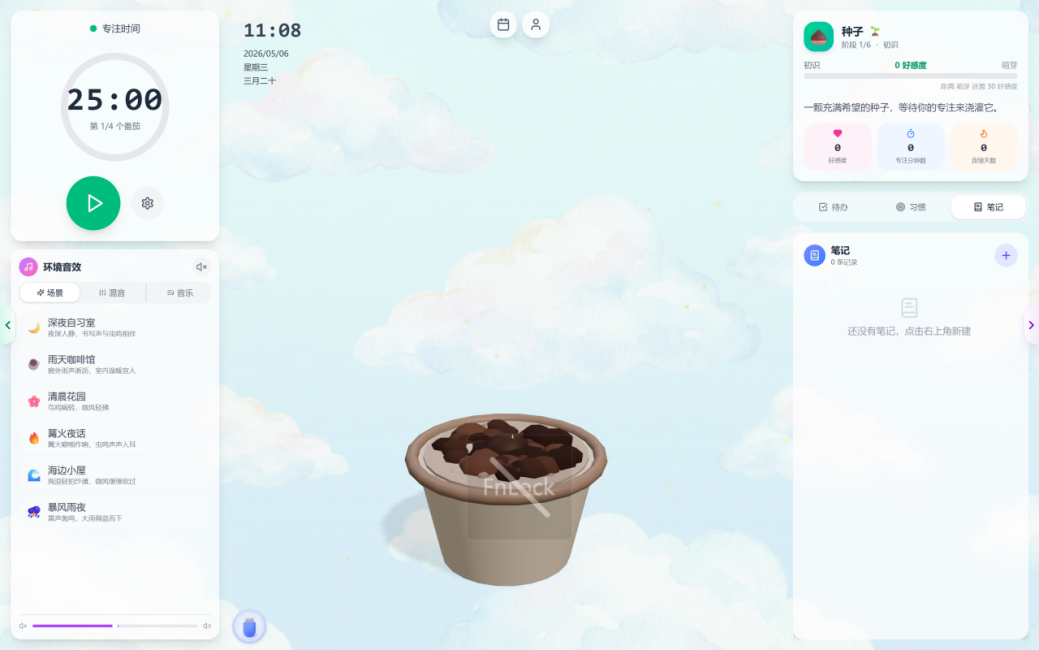
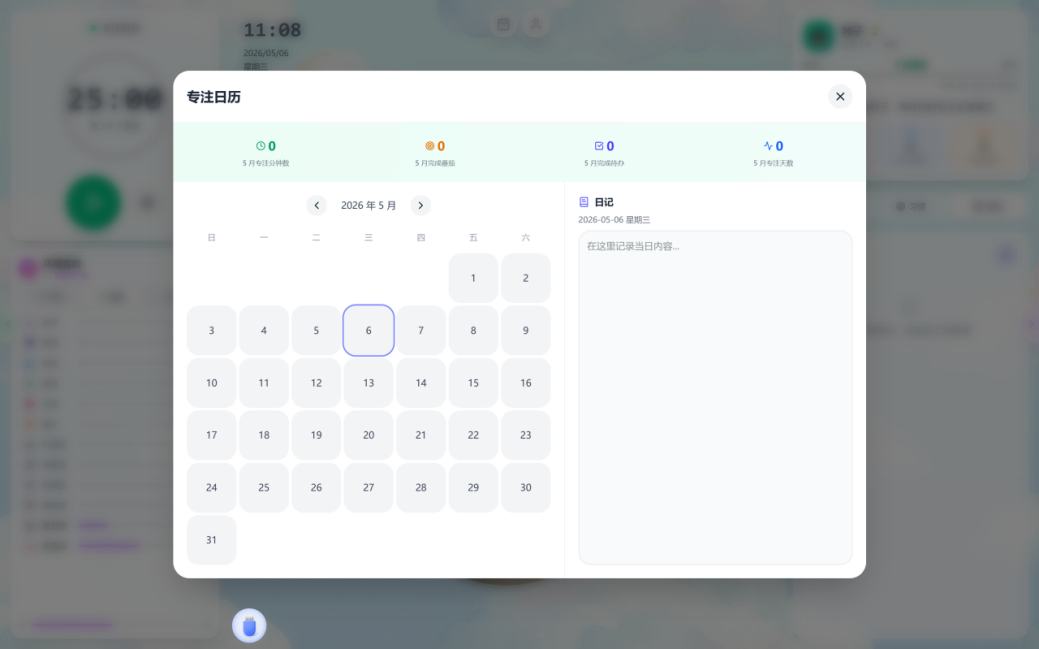
Seed: TideRain is an immersive focus application designed for studying, writing, programming, and daily task management. Centered on the loop of "focus - rest - record - review - grow," it integrates a Pomodoro timer, ambient soundscapes, local music playback, plant-growth feedback, to-do management, habit tracking, note-taking sticky notes, monthly calendar and diary, and personal statistics into one interactive system, creating a digital focus space that combines efficiency management with companionship.
Third Prize: TheGame by Ziye Wang, Helin Yang, Zeyu Liu
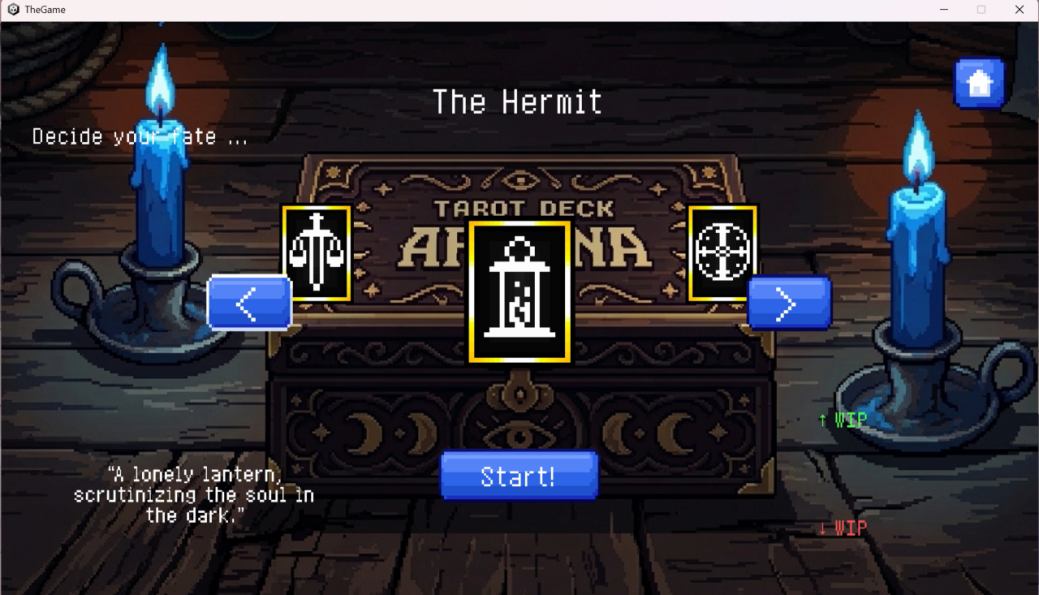
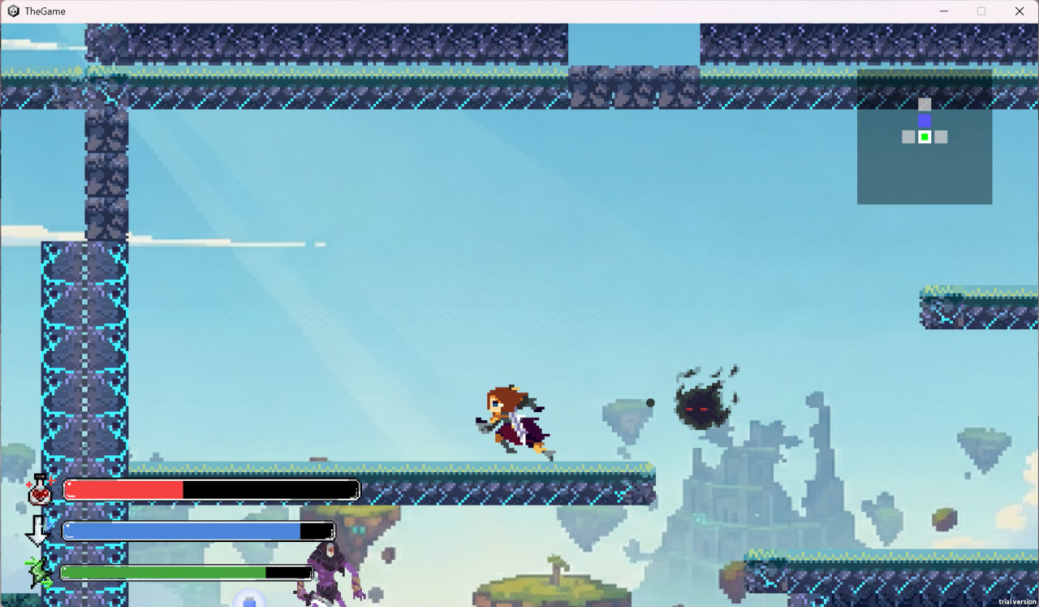
TheGame is a roguelite 2D RPG platformer built around gravity manipulation. The protagonist can control their own gravity, moving freely through levels.
At the start, players choose a tarot card that grants various abilities, allowing them to develop their own playstyle. The game features diverse room types, distinct enemies, a rich collection system, and challenging bosses.
Third Prize: Journey of Star&Sea by Jiangnan Wang, Zhiyi Lu
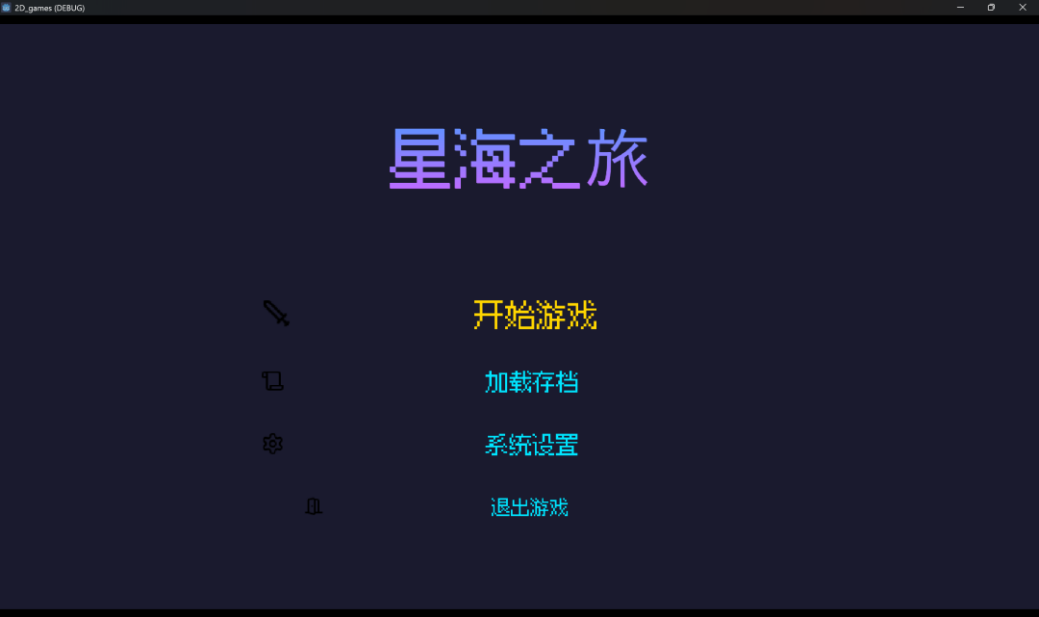
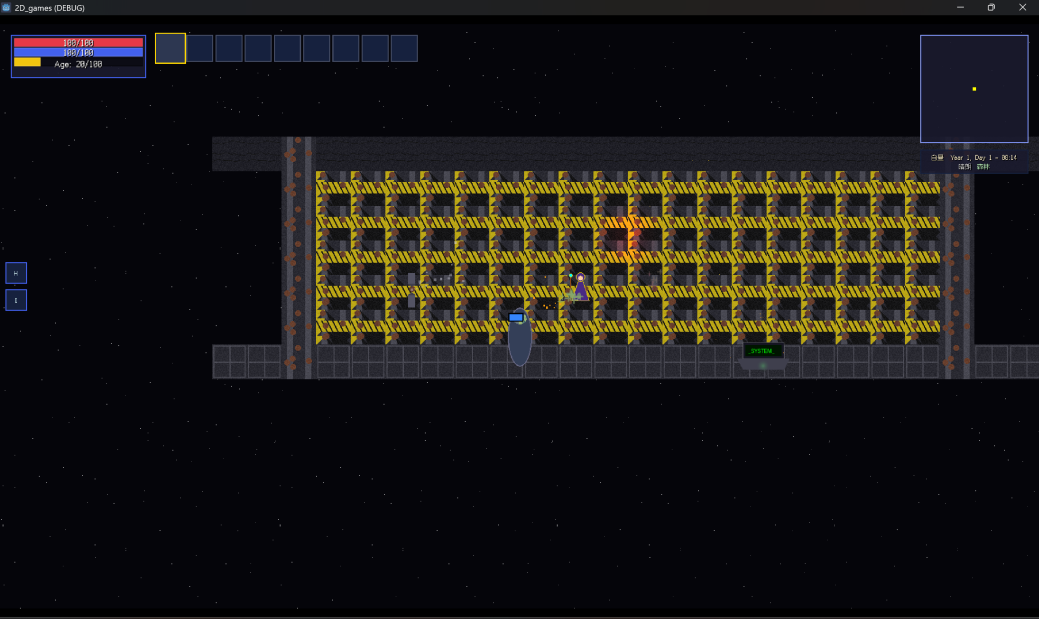
Journey of Star&Sea is a 2D pixel-art fantasy adventure game infused with programming logic, using minimalist geometric shapes to create a grand narrative spanning "flat planets" and unknown galaxies. Players take on the role of an exiled prince from a flat planet, fleeing diamond rebels on an interstellar journey of survival and restoration. The game skillfully blends survival, combat, and bloodline inheritance, offering deep strategic character growth through a unique "wand programming" mechanic and an inheritance system.
It provides a modular spell-casting system, with every design choice encouraging players to uncover planetary secrets, while an intuitive Mana construction panel and attribute cultivation interface ensure immersive hardcore puzzle-solving.
Third Prize & Best 3D Award: Vigorous by Zirui Wang, Zhenghao Liu, Yibo Ding
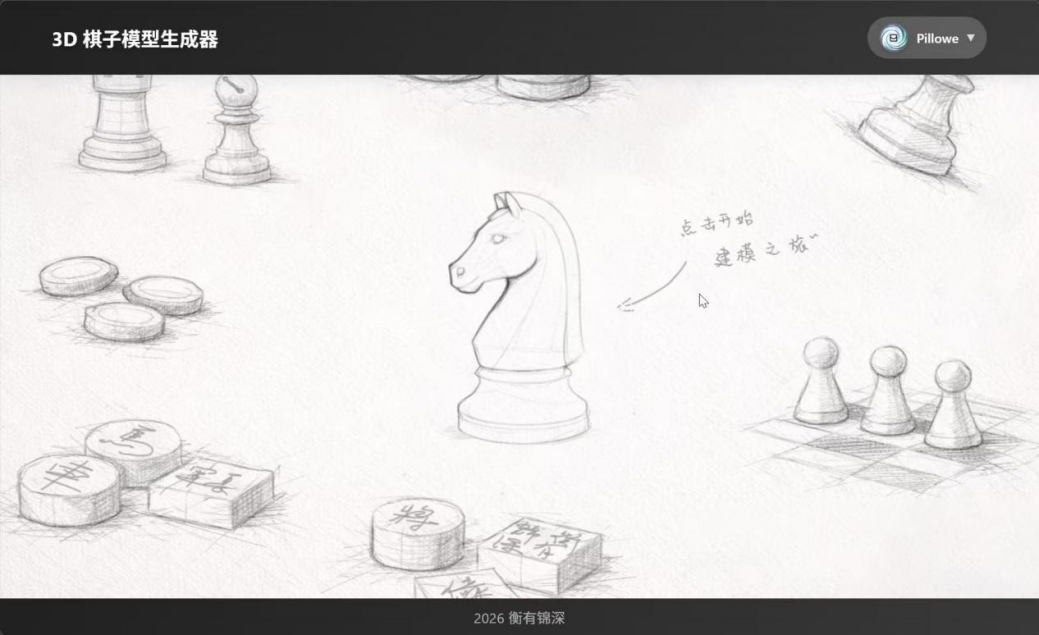
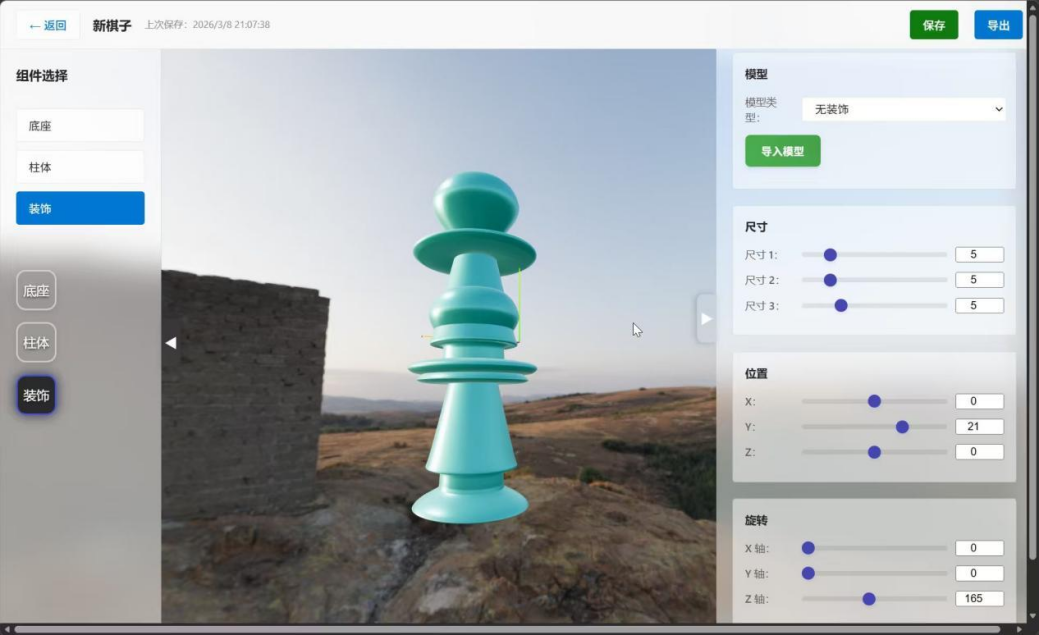
Vigorous is a web application focused on the specific modeling scenario of "game pieces," providing lightweight, easy-to-use 3D modeling.
Users can create multiple projects, each containing several game pieces. In the editing interface, users can adjust geometric parameters to style the base, column, and decoration layers of a piece, or try more flexible function-based model design. Designed pieces can be exported in .stl format for 3D printing or the more general .obj format.
Third Prize: ICARUS by Haoran Zhang, Jiaxu Li
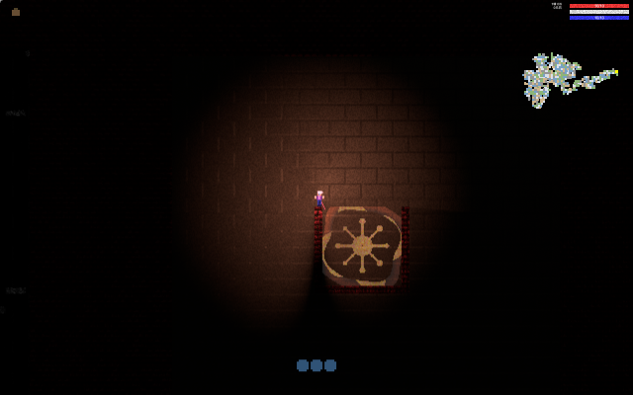
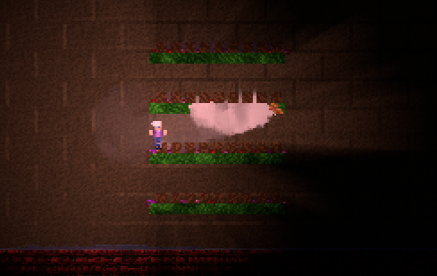
ICARUS is a room-based game centered on pixel-level sand-fall simulation. Its world is inspired by the Icarus myth - collect wax and feathers to fly toward the sky, but one misstep can cause you to be blown up by your own bullets. Players act as descendants of the gods, obtaining insects through combat and equipping them into three "kill move" slots to build and combine skills. The game world is fully composed of physically simulated pixels; all substances, light, and skills interact in real time at the pixel level.
Third Prize: TsingTeam by Lingxiao Chen, Xi Sun, Kexin Ren


TsingTeam is a WeChat mini-program platform for Tsinghua University students to form teams for competitions. It helps students quickly learn about on- and off-campus competition information and conveniently post or join team-up requests. The platform integrates an AI agent (based on DeepSeek) to provide competition consultation, helping users find information and match teammates more efficiently.
Third Prize: Fate: 2443 by Wenqian Zhang, Ziyu Wang, Taodi Wang
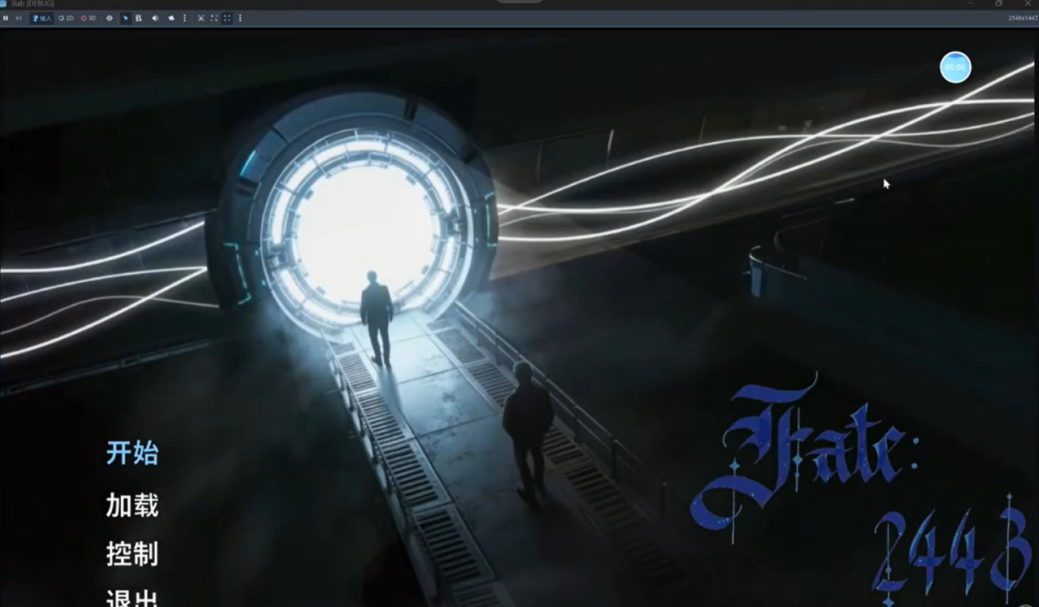
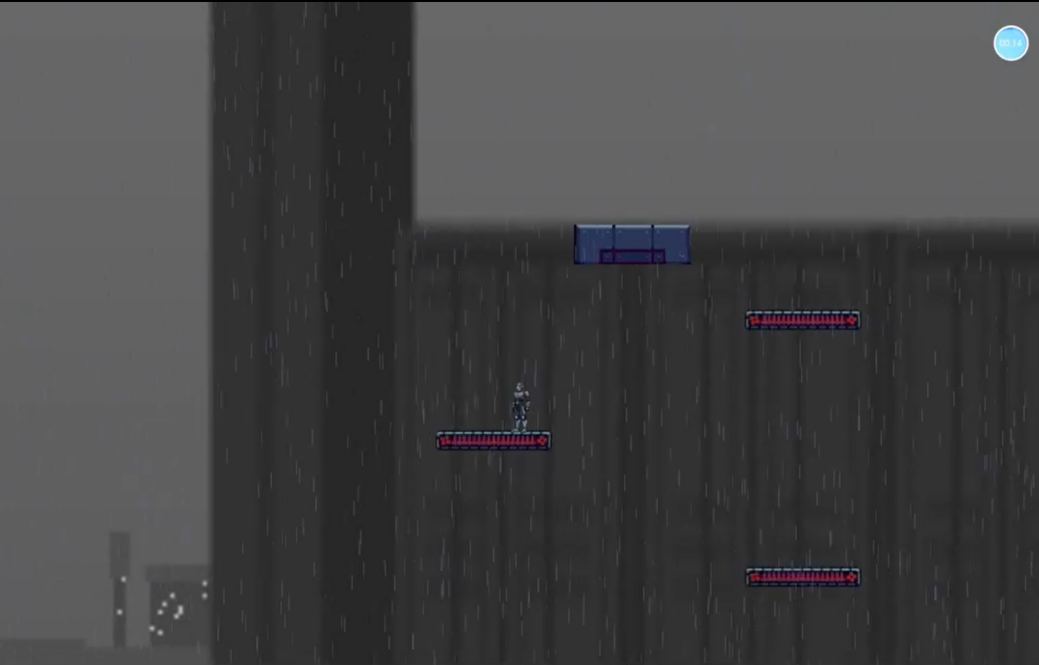
Fate: 2443 is a story-driven, immersive two-player cooperative puzzle-platformer that blends hardcore puzzle-solving with parkour elements.
The game is set in the mid-25th century, when a small number of top scientists have already discovered time-travel and space-travel technologies. The two players take on the roles of a scientist and a special agent, respectively. The main storyline involves discovering secrets in a variety of complex environments, finding clues, and locating the entrances to the next scenes in pursuit of the "evil" scientist.
Third Prize: Echo-of-Time by Yanjia Li, Tianxiao Li, Xingyu Zhao

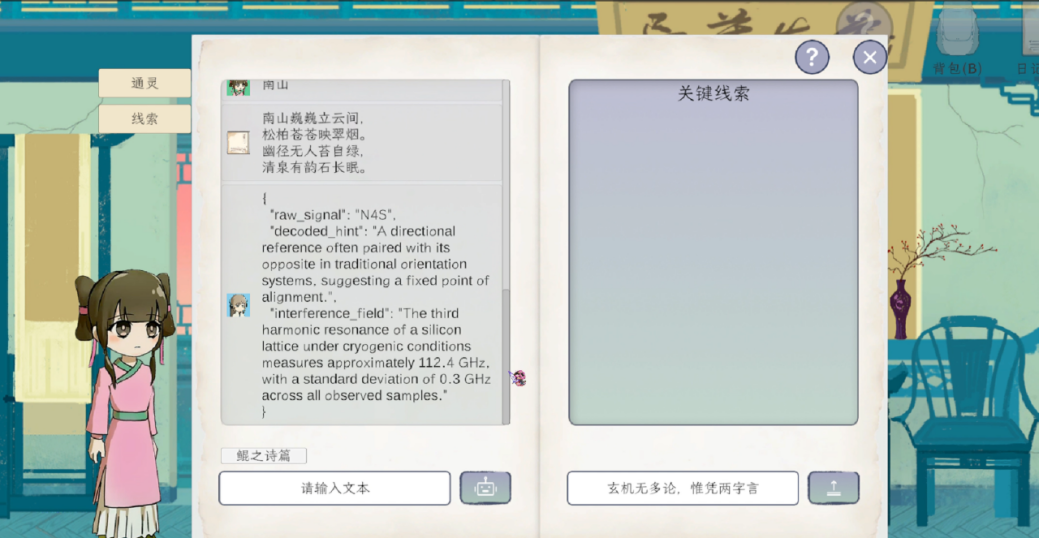
Echo-of-Time is a narrative-driven, highly interactive puzzle-adventure game incorporating cutting-edge AI technology, with a story centered on traveling across time. Players typically assume the role of a "future being" or similar identity, moving between different map boundaries and layers, collecting clues and solving mechanical/logical devices to advance the plot.
The game implements basic adventure-game operations (scene movement, item collection, NPC dialogue) as well as core special features (real-time natural-language AI interaction, multi-dimensional time jumps, online state synchronization). It features logically rigorous puzzle design, a stable online framework, and an immersive narrative atmosphere.