2026年5月28日,清华大学电子工程系“可持续创新国际课程”系列模块-《创新医疗器械:从原理到实践》将迎来第七讲。清华大学杰出访问教授,加拿大卡尔顿大学教授Andy Adler将介绍电阻抗断层成像(EIT)技术在血流成像中的应用,重点探讨如何通过先进的时间序列数据处理方法从复杂信号中提取有临床价值的血流信息。同时,讲座将回顾无创血流监测的发展历程,分析EIT在重症监护、运动表现及应激反应评估中的潜力,并讨论当前面临的关键挑战与未来发展方向。
讲座预告
《创新医疗器械:从原理到实践》第七期
Blood flow imaging with EIT: advanced progressing of time-series data
时间: 2026年6月4日(周四),12:30-14:00
地点: 清华大学电子工程馆7层咖啡厅
主讲人: Andy Adler,加拿大卡尔顿大学教授
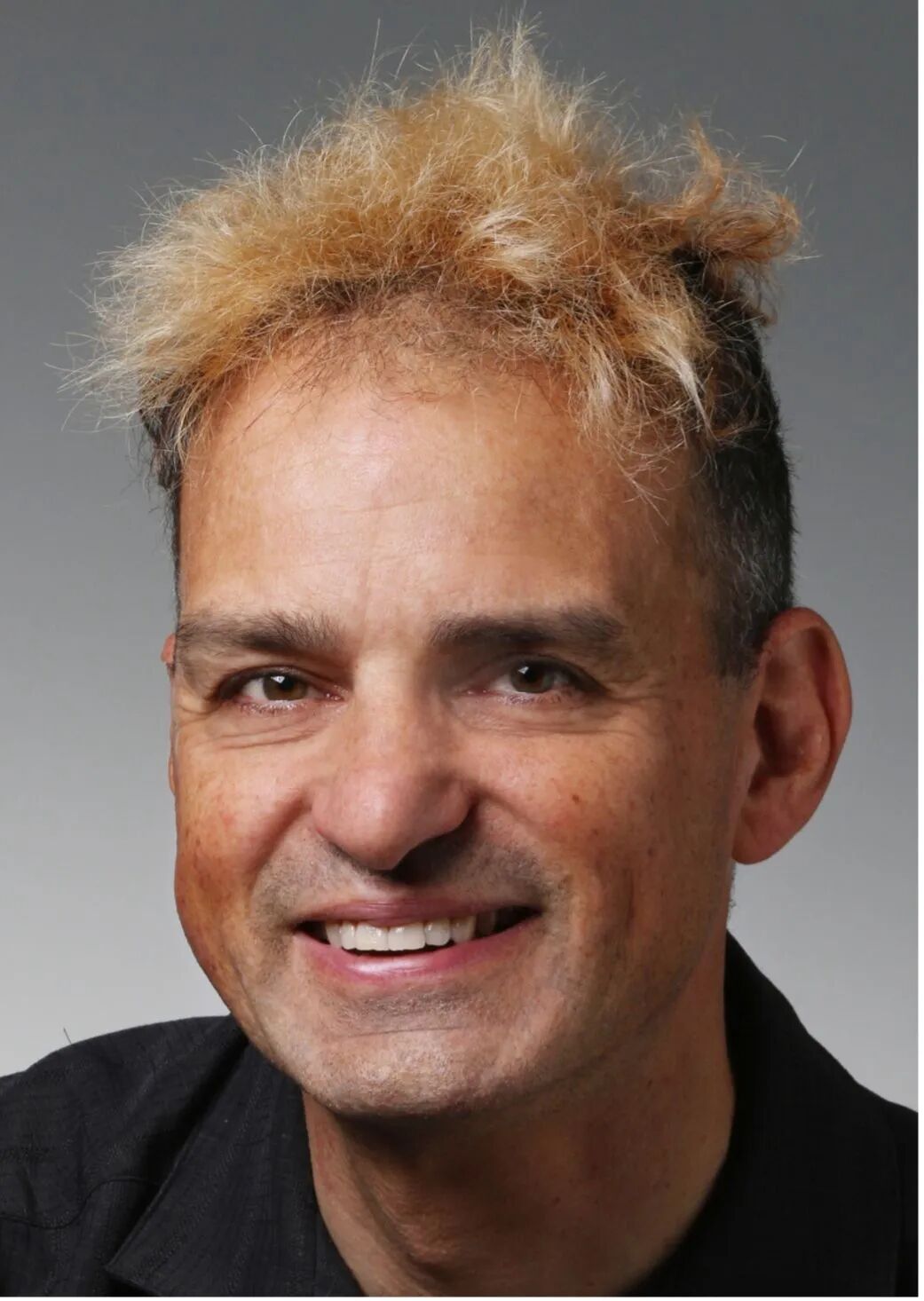
主讲人简介:
Adler is a Canada Research Professor in biomedical engineering in Systems and Computer Engineering at Carleton University, in Ottawa, Canada. A main focus of Adler’s work is electrical impedance tomography (EIT), the imaging of the body using small applied electrical currents. Adler's focus is the development of robust image reconstruction algorithms suitable for the challenges of the clinical environment, with the ability to compensate for electrode movement, disconnections, and hardware-specific interference. He has been very active in translation of the technology to the bedside. He is the maintainer of the EIDORS.org- an open-source software for EIT, and has led four international consensus projects on EIT image reconstruction, terminology and clinical applications. He is active in industry collaborations and his software is central to at the products of at least four medical technology companies. He has an IEEE award for his role in technology translation, and has published 146 journal papers and edited the main text on EIT technology.
讲座主题:
EIT技术在血流成像中的前沿探索
Blood flow imaging with EIT: advanced progressing of time-series data
讲座摘要:
Electrical Impedance Tomography (EIT) images the movement of conductivity-contrasting fluids in the body. Today, EIT is used clinically to image breathing and to help manage patients with lung injuries. Blood flow (perfusion) is more difficult to measure with EIT, but it's important because blood flow is such an important clinical variable. It is vital to monitor in the intensive-care unit, but is also critical to understand sports performance and stress responses. In this talk we review the story of non-invasive approaches to blood-flow variables, looking at generally at non-invasive instruments and specifically at EIT data. Progressively more sophisticated techniques are used to identify useful signals over time and space in images. We review the various techniques used, some of the key challenges, and outline ideas for pathways forward.
附:课程安排与背景介绍
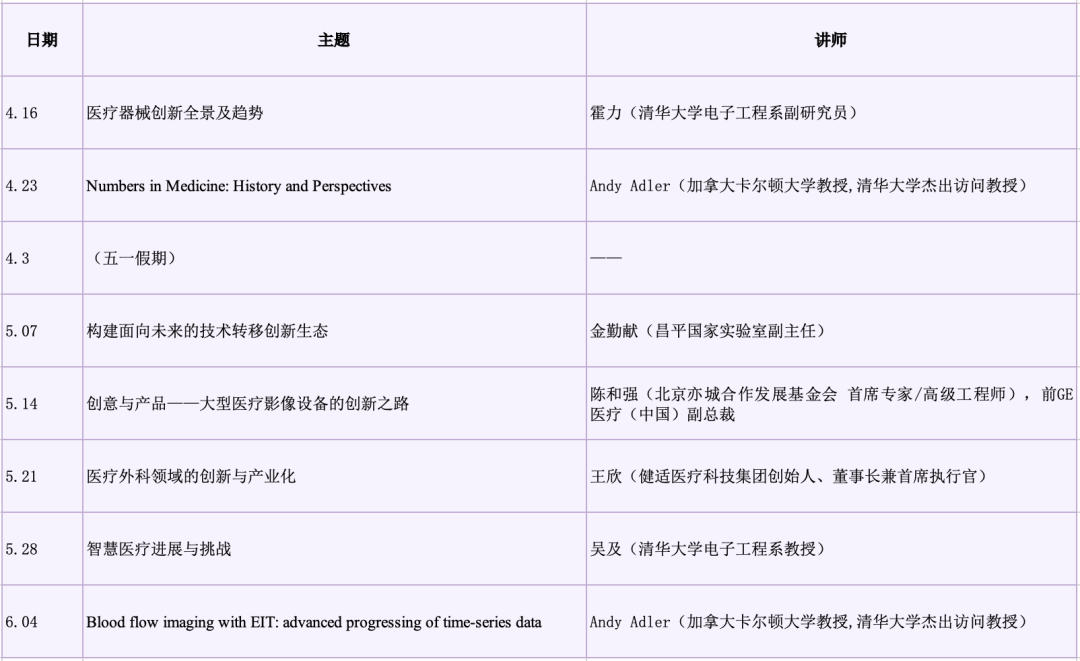
(备注:演讲人顺序及主题可能调整)
关于电子系“可持续创新国际课程”系列
自2022年起,清华大学电子工程系持续推进“可持续创新国际课程”建设。2022年秋季与哈佛大学联合开设“哈佛-清华可持续创新课程”(课程号Y0230532),2024年秋季与香港大学及英飞凌、MathWorks等国际企业合作开设“可持续创新研究”课程(课程号Y0230571),累计已有百余名学生参与跨境交流与项目实践。
本次《创新医疗器械》(课程号Y0230581)由电子系李懋坤教授、霍力教授与清华大学杰出访问教授、加拿大卡尔顿大学Andy Adler教授共同策划,系统讲授从基础原理、关键技术到系统实现与临床应用的整体框架。课程采用“专题讲座+研讨”形式,旨在促进师生、产业界与学术界之间的交流。课程特别邀请多位来自学术界、国家实验室及国际医疗企业的专家,引导学生理解电子信息技术在医学成像、生物传感与智能医疗设备中的核心作用,掌握“原理—系统—产品—应用”的完整链条。该课程体现了电子系在教育、科研、社会服务及国际影响力四大领域中以“可持续创新”为核心的持续行动。
说明
本期课程报名已截止,感谢关注。
每场讲座将向校内师生及校友开放少量旁听名额。名额有限, 请提前联系
ee-global@tsinghua.edu.cn
提供姓名,单位,身份/职务,联系电话,进行申请。
欢迎对医疗器械创新感兴趣的师生及合作伙伴持续关注。
供稿|陈 兰 刘道齐
排版|陶旋姿
审核|余潇潇 沈 渊 李冬梅